 Consider the choices you make every day: what food you order, how often you exercise, the way you organize your work.
You might think that they’re the products of well-considered decision making, but they’re not. They’re habits. If you can change your habits, you can change your life.
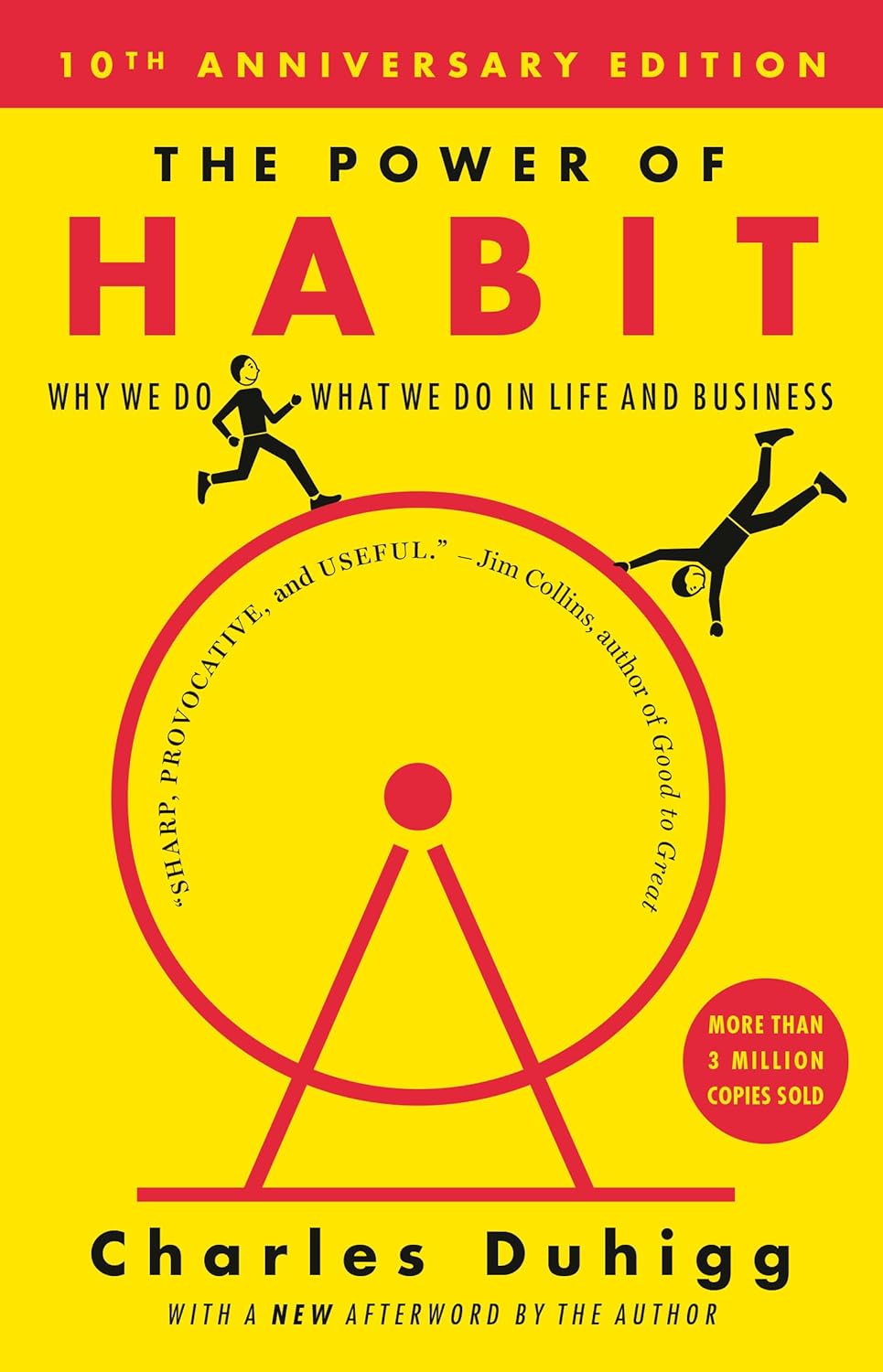
This is what Charles Duhigg explores in his book “The Power of Habit: Why We Do What We Do in Life and Business”. Small habits may seem insignificant but over time their compounding effect can have a major impact on your health, wealth, and happiness. The author writes:
Love reading and writing? Submit a post to our blog.
Habits, scientists say, emerge because the brain is constantly looking for ways to save effort. Left to its own devices, the brain will try to make almost any routine into a habit, because habits allow our minds to ramp down more often. This effort-saving instinct is a huge advantage. … An efficient brain also allows us to stop thinking constantly about basic behaviors, such as walking and choosing what to eat, so we can devote mental energy to inventing spears, irrigation systems, and, eventually, airplanes and video games.
Duhigg notes that when our brains power down, we might fail to notice something important, such as “a speeding car as we pul onto the street.” That’s why “our basal ganglia have devised a clever system to determine when to let habits take over”:
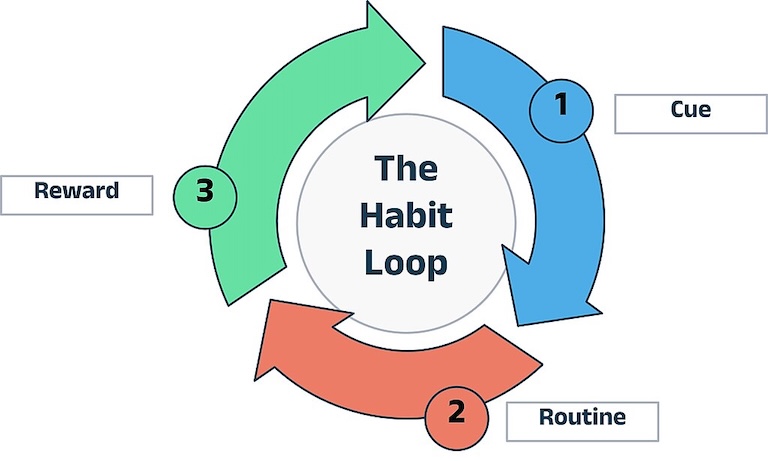
This process within our brains is a three-step loop. First, there is a cue, a trigger that tells your brain to go into automatic mode and which habit to use. Then there is the routine, which can be physical or mental or emotional. Finally, there is a reward, which helps your brain figure out if this particular loop is worth remembering for the future.
He adds:
Researchers have learned that cues can be almost anything, from a visual trigger such as a candy bar or a television commercial to a certain place, a time of day, an emotion, a sequence of thoughts, or the company of particular people. Routines can be incredibly complex or fantastically simple (some habits, such as those related to emotions, are measured in milliseconds). Rewards can range from food or drugs that cause physical sensations, to emotional payoffs, such as the feelings of pride that accompany praise or self congratulation.
[…]Over time, this loop — cue, routine, reward; cue, routine, reward — becomes more and more automatic. The cue and reward become intertwined until a powerful sense of anticipation and craving emerges. Eventually, whether in a chilly MIT laboratory or your driveway, a habit is born.
Then Duhigg gives an example:
Consider fast food, for instance. … The meals are inexpensive. It tastes so good. After all, one dose of processed meat, salty fries, and sugary soda poses a relatively small health risk, right? It’s not like you do it all the time.
But habits emerge without our permission. Studies indicate that families usually don’t intend to eat fast food on a regular basis. What happens is that a once a month pattern slowly becomes once a week, and then twice a week — as the cues and rewards create a habit.
He concludes with this thought:
Habits can be ignored, changed, or replaced. But the reason the discovery of the habit loop is so important is that it reveals a basic truth: When a habit emerges, the brain stops fully participating in decision making. It stops working so hard, or diverts focus to other tasks. Unless you deliberately fight a habit — unless you find new routines — the pattern will unfold automatically.
However, simply understanding how habits work — learning the structure of the habit loop — makes them easier to control. Once you break a habit into its components, you can fiddle with the gears.
[…]If we learn to create new neurological routines that overpower [bad] behaviors — if we take control of the habit loop — we can force those bad tendencies into the background…. And once someone creates a new pattern, studies have demonstrated, going for a jog or ignoring the doughnuts becomes as automatic as any other habit.
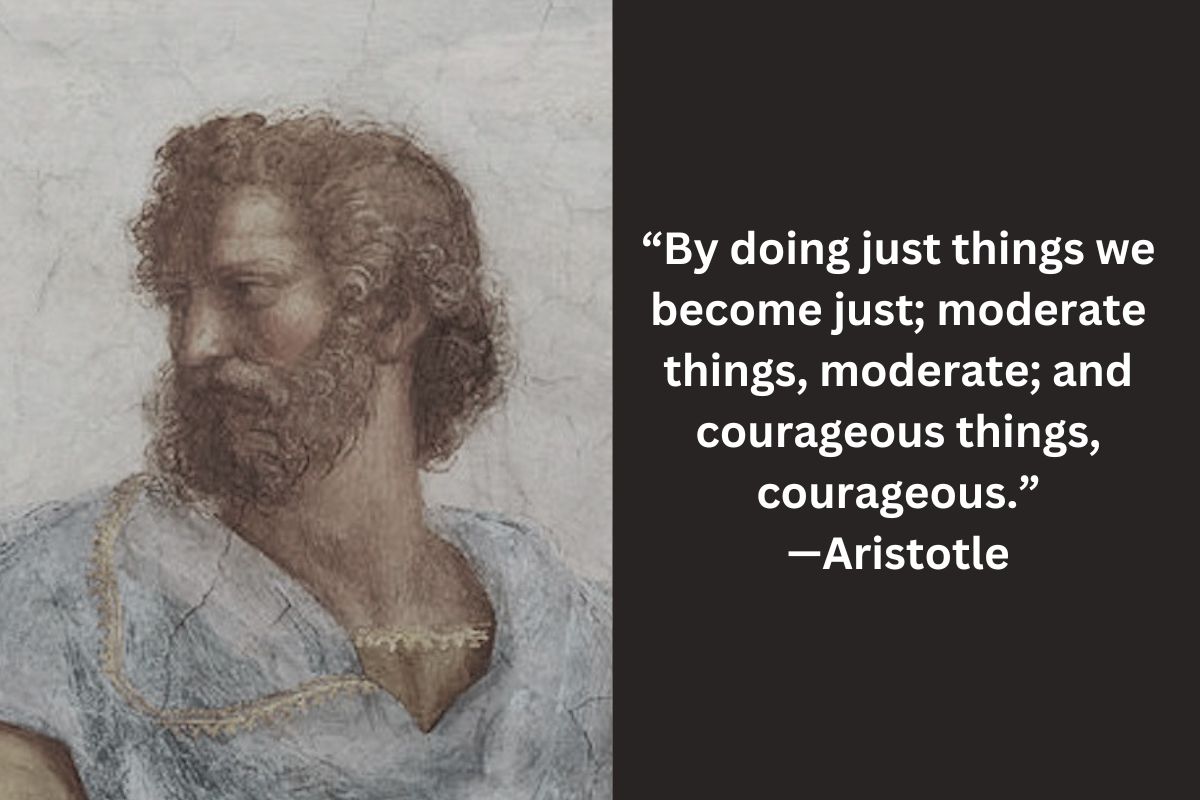
“The Power of Habit” will change your life for the better. Complement with Aristotle on virtues as habits.

I’m a freelance writer with 6 years of experience in SEO blogging and article publishing. While you’re here, get the latest updates by subscribing to my newsletter.