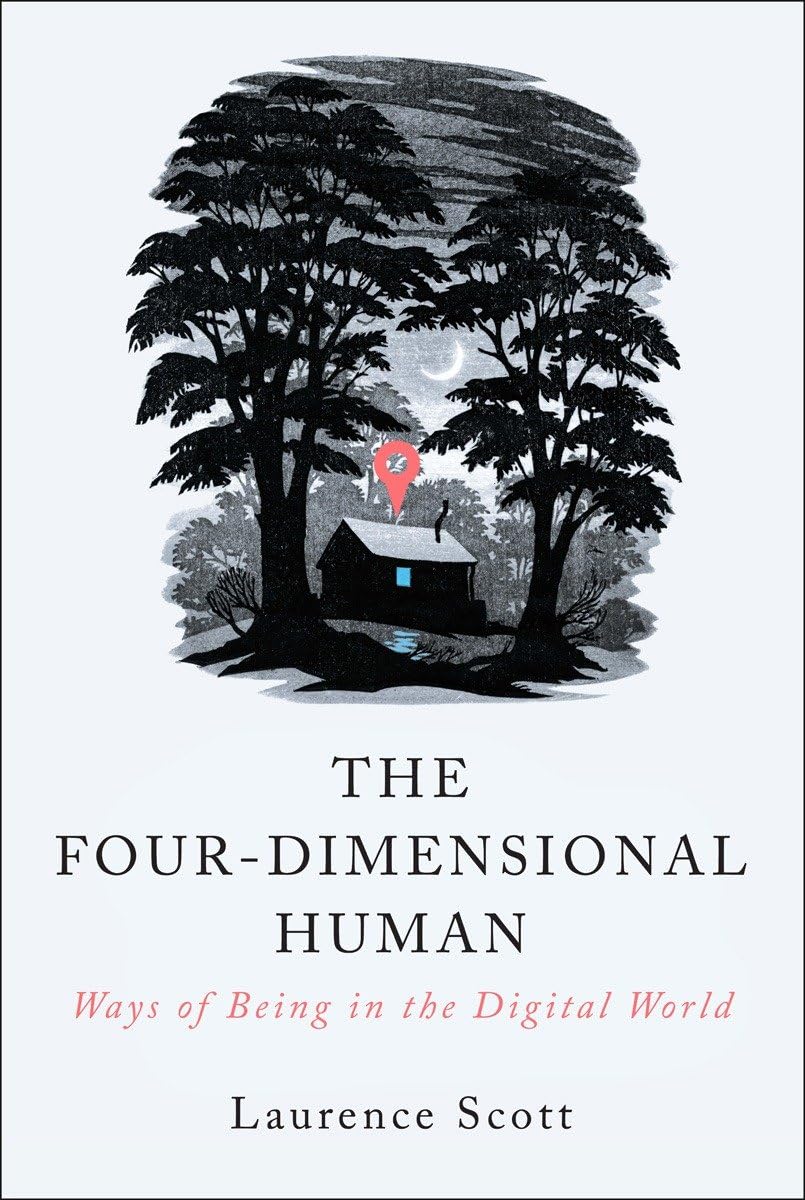
 One of the reasons why I love reading is because it can become a portal that transports us to simpler, happier times. A few days ago, “The Four-Dimensional Human: Ways of Being in the Digital World” by Laurence Scott became such a portal.
It reminded me of “the early years of life in the fourth dimension — our online world of social media, ceaseless communication and instant information.”
In particular, it recaptured my sense of anticipation when I sat down to practice modem meditation, a popular daily ritual that you’re probably too young to remember. The author writes:

Love reading and writing? Submit a post to our blog.
When the early, domestic internet appeared in the 1990s, there was a decisive separation between physical reality and that other place, which went by several aliases.
The first household modems enforced this separation by acting as though they were grinding up against something hard, squealing and whirring like a drill hitting a rock.
Sitting next to them, perhaps wearing a t-shirt over a long-sleeved t-shirt, we might have sighed or yawned, looking mildly around the room or prodding at the squidge of the mousepad, but all the while feeling quickened somehow, as on the verge of arrival.
The modem’s faithful churn made it seem as if it were tunnelling through to somewhere else, opening up a space for us to inhabit.
Once inside we followed our moods, web pages listlessly completing themselves in descending strips, producing all manner of suspense as the news story or piece of erotica toppled slowly into being. And then someone in the house would need the telephone, the ultimate, old-world trump card.
“The Four-Dimensional Human” is a wonderful read in its entirety. Complement with 7 best Sherry Turkle books on human-computer relationship, and then, for nothing more than sheer delight, revisit Wendell Berry on why you shouldn’t buy a computer.

I’m a freelance writer with 6 years of experience in SEO blogging and article publishing. While you’re here, get the latest updates by subscribing to my newsletter.