.
 “The Elements of Style,” hailed by many as “the most important and timeless book on writing,” argues that good writing rests on three principles: purity, perspicuity, and precision.
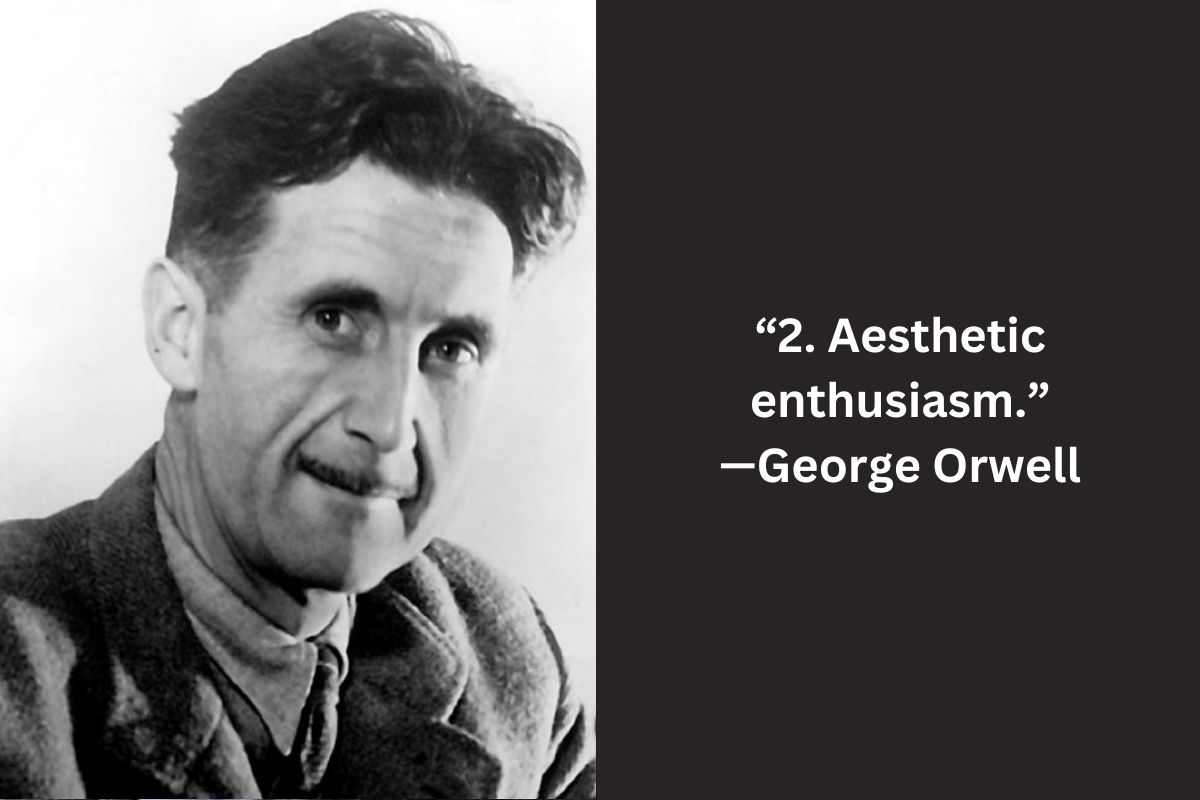
George Orwell (June 25, 1903–January 21, 1950) echoed this belief. In his altogether indispensable “Politics and the English Language,” he writes: “Political language — and with variations this is true of all political parties, from Conservatives to Anarchists — is designed to make lies sound truthful and murder respectable, and to give solidity to pure wind.”
Orwell’s disdain for imprecise and misleading prose stemmed from its use by politicians to conceal truth and deceive the public. For example, he pointed out the following: “Since you don’t know what Fascism is, how can you struggle against Fascism?” Then he added, “One need not swallow such absurdities as this, but one ought to recognize that the present political chaos is connected with the decay of language” and that “one can probably bring about some improvement by starting at the verbal end.” Hence, his famous advice:
Love reading and writing? Submit a post to our blog.
[Good writing] is especially concerned with the scraping of every word or idiom which has outworn its usefulness. It has nothing to do with correct grammar and syntax, which are of no importance so long as one makes one’s meaning clear, or with the avoidance of Americanisms, or with having what is called a ‘good prose style.’On the other hand it is not concerned with fake simplicity and the attempt to make written English colloquial. Nor does it even imply in every case preferring the Saxon word to the Latin one, though it does imply using the fewest and shortest words that will cover one’s meaning. What is above all needed is to let the meaning choose the word, and not the other way about. In prose, the worst thing one can do with words is to surrender to them.
Probably it is better to put off using words as long as possible and get one’s meaning as clear as one can through pictures or sensations. Afterwards one can choose — not simply accept — the phrases that will best cover the meaning, and then switch round and decide what impression one’s words are likely to make on another person. This last effort of the mind cuts out all stale or mixed images, all prefabricated phrases, needless repetitions, and humbug and vagueness generally.
He goes on to say, “But one can often be in doubt about the effect of a word or a phrase, and one needs rules that one can rely on when instinct fails. I think the following rules will cover most cases:”
(i) Never use a metaphor, simile or other figure of speech which you are used to seeing in print.
(ii) Never use a long word where a short one will do.
(iii) If it is possible to cut a word out, always cut it out.
(iv) Never use the passive where you can use the active.
(v) Never use a foreign phrase, a scientific word or a jargon word if you can think of an everyday English equivalent.
(vi) Break any of these rules sooner than say anything outright barbarous.
He concludes with these four questions that “a scrupulous writer, in every sentence that he writes, will ask himself:”
What am I trying to say? What words will express it? What image or idiom will make it clearer? Is this message fresh enough to have an effect?
However, all such advice should be ingested with caution. As Charles Schifano argues in his excellent piece titled “The Problem With Contemporary Writing:”
Most writing advice found today resembles what you might call editing advice. … Take a close look at the advice offered by most contemporary style guide and you’ll find the words cut and trim and delete and avoid and skip and remove and shorten. If you can write a sentence in four words, why not three?
In a sentiment that calls to mind Kerouac’s famous call to “remove literary, grammatical and syntactical inhibition,” Schifano concludes:
After you’ve mastered the three-word pithy phrase of eternal wisdom can you spin a bon mot in two words? What about if you suppress all words and lift an eyebrow while grunting — would that be best?
Complement “Politics and the English Language” with three essentials of effective writing, the beloved writer Jack Kerouac’s 30 rules of writing, and then, for nothing more than sheer delight, try to answer this question, “Can you really tell if a sentence was written by AI?”

I’m a freelance writer with 6 years of experience in SEO blogging and article publishing. While you’re here, get the latest updates by subscribing to my newsletter.