.
 When I first got my hands on ChatGPT, I asked it to write in the prose style of my favorite authors, such as C.S. Lewis, George Orwell, and Ernest Hemingway.
I did it because I was looking for the best way to express my own thoughts and improve as a writer. You may have the same goal if you’re reading this article.
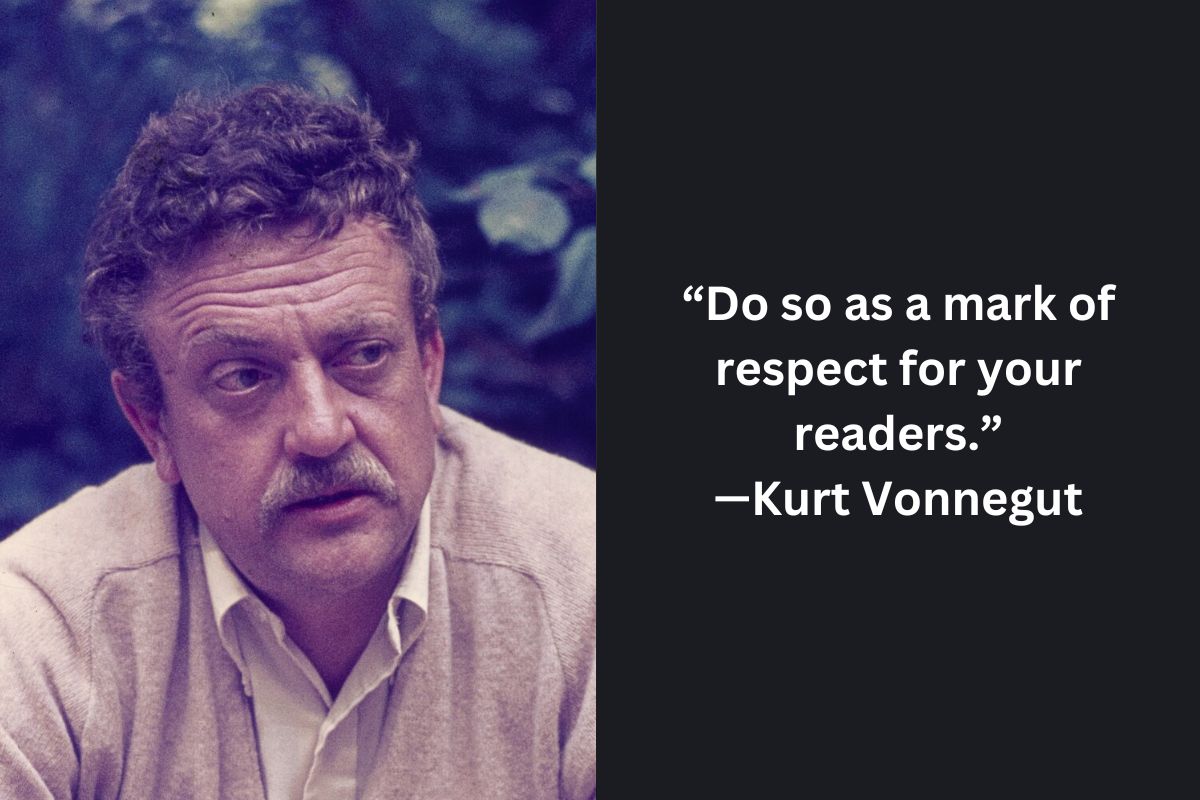
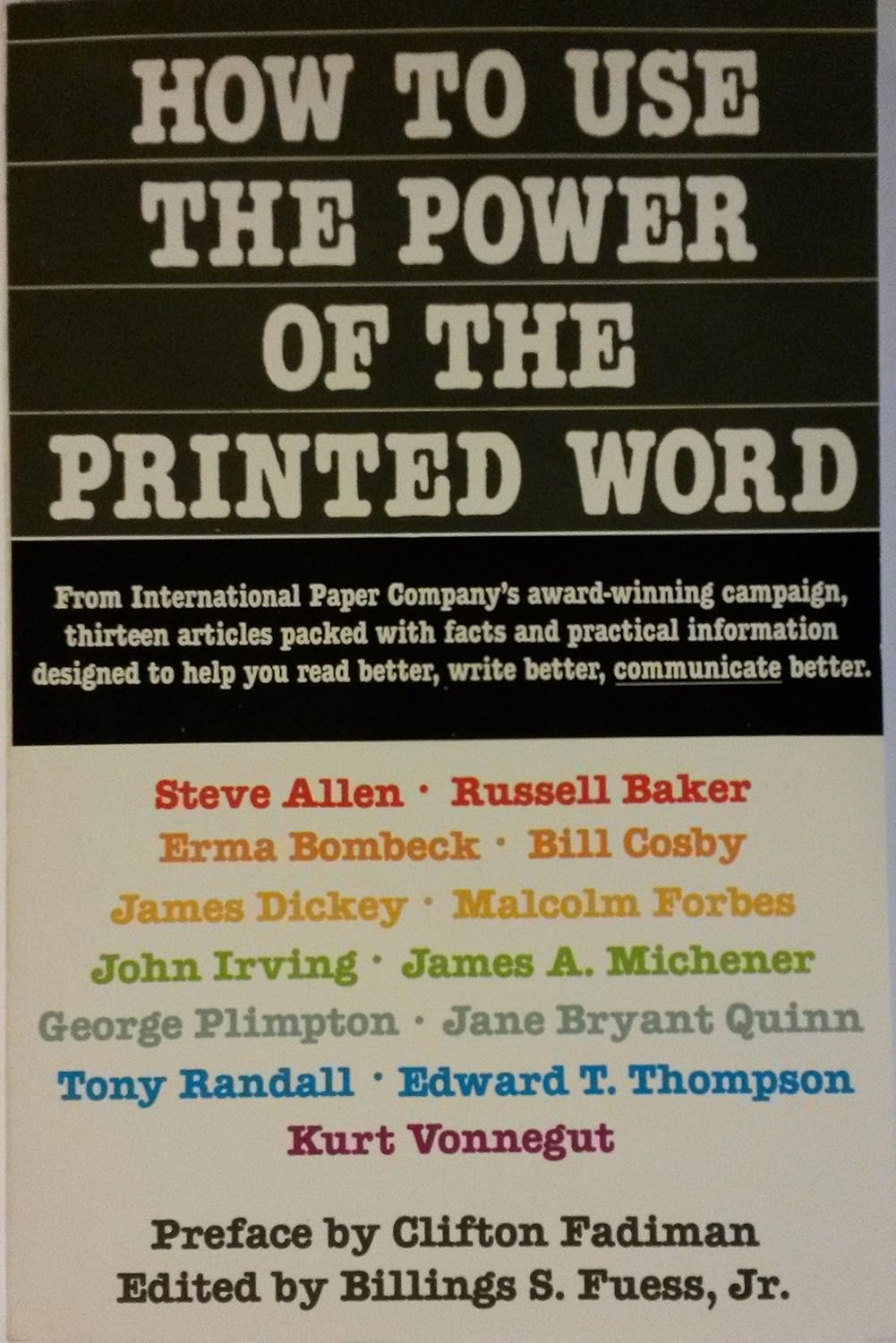
But what is a good prose style exactly? Different writers seem to have different answers to this question, and the perspective I want to share with you today comes from the essay titled “How to Write With Style” by Kurt Vonnegut, included in the collection “How to Use the Power of of the Printed Word.” In it, he argues that being yourself on a page is the single most important element of your writing style.
Love reading and writing? Submit a post to our blog.

Kurt Vonnegut writes:
Newspaper reporters and technical writers are trained to reveal almost nothing about themselves in their writing. This makes them freaks in the world of writers, since almost all of the other ink-stained wretches in that world reveal a lot about themselves to readers. We call these revelations, accidental and intentional, elements of style.
These revelations tell us as readers what sort of person it is with whom we are spending time. Does the writer sound ignorant or informed, stupid or bright, crooked or honest, humorless or playful — ? And on and on.
He adds that “your own winning style must begin with ideas in your head” and goes on to give eight tips on how to develop your own style:
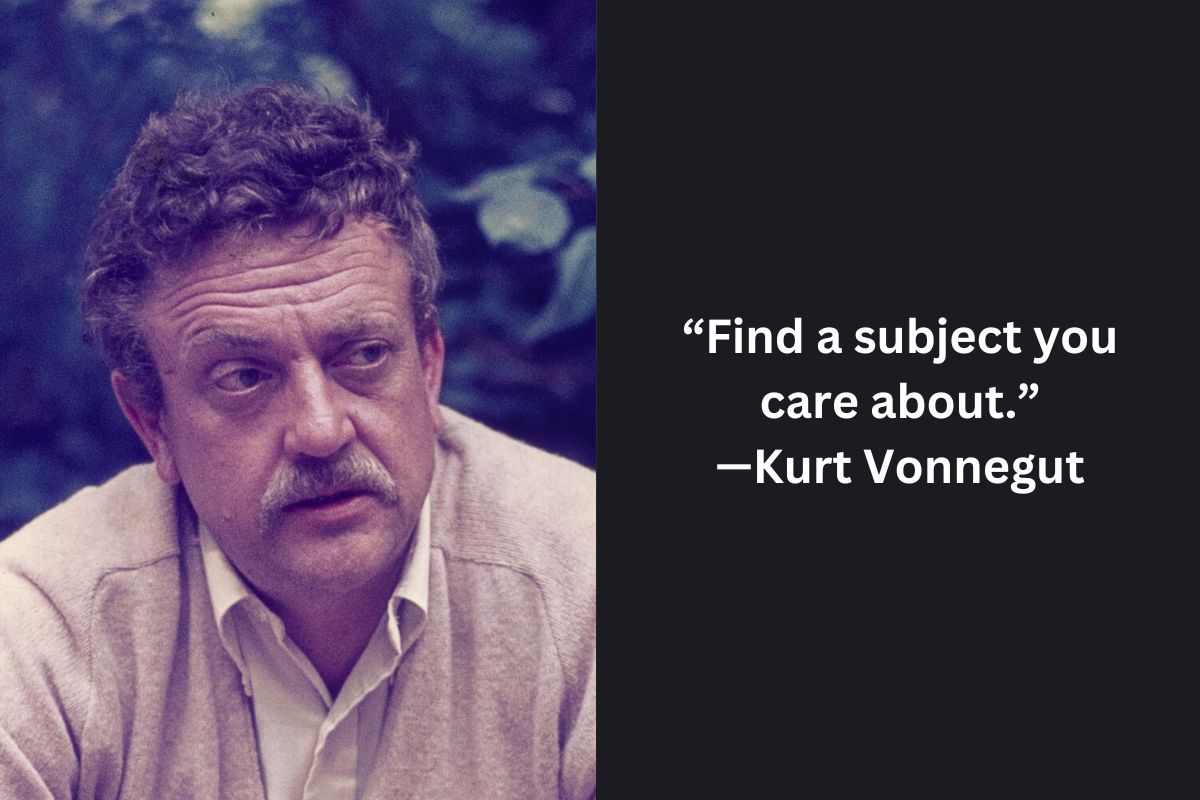
1. Find a Subject You Care About
Find a subject you care about and which you in your heart feel others should care about. It is this genuine caring, and not your games with language, which will be the most compelling and seductive element in your style.
I am not urging you to write a novel, by they way…. A petition to the mayor about a pothole in front of your house or a love letter to the girl next door will do.
2. Do Not Ramble, Though
I won’t ramble on about that.
3. Keep It Simple
As for you use of language: Remember that two great masters of language, William Shakespeare and James Joyce, wrote sentences which were almost childlike when their subjects were most profound. ‘To be or not to be?’ asks Shakespeare’s Hamlet. The longest word is three letters long.
Joyce, when he was frisky, could put together a sentence as intricate and as glittering as a necklace for Cleopatra, but my favorite sentence in his short story ‘Eveline’ is this one: ‘She was tired.’ At that point in the story, no other words could break the heart of a reader as those three words do.
[…]4. Have the Guts to Cut
It may be that you, too, are capable of making necklaces for Cleopatra, so to speak. But your eloquence should be the servant of the ideas in your head. Your rule might be this: If a sentence, no matter how excellent, does not illuminate your subject in some new and useful way, scratch it out.
5. Sound Like Yourself
The writing style which is most natural for you is bound to echo the speech you heard when a child. English was the novelist Joseph Conrad’s third language, and much that seems piquant in his use of English was no doubt colored by his first language, which was Polish.
And lucky indeed is the writer who has grown up in Ireland, for the English spoken there is so amusing and musical. I myself grew up in Indianapolis, where common speech sounds like a band saw cutting galvanized tin, and employs a vocabulary as unornamental as a monkey wrench.
[…]All these varieties of speech are beautiful, just as the varieties of butterflies are beautiful. No matter what your first language, you should treasure it all your life. If it happens not to be standard English, and if it shows itself when you write standard English, the result is usually delightful, like a very pretty girl with one eye that is green and one that is blue.
I myself find that I trust my own writing most, and others seem to trust it most, too, when I sound most like a person from Indianapolis, which is what I am.
6. Say What You Mean to Say
I understand now that all those antique essays and stories with which I was to compare my own work were not magnificent for their datedness or foreignness, but for saying precisely what their authors meant them to say.
[…]7. Pity the Readers
Readers have to identify thousand of little marks on paper, and make sense of them immediately. They have to read, an art so difficult that most people don’t really master it even after having studied it all through grade school and high school — twelve long years.
So this discussion must finally acknowledge that our stylistic options as writers are neither numerous nor glamorous, since our readers are bound to be such imperfect artists.
Our audience requires us to be sympathetic and patient teachers, ever willing to simplify and clarify, whereas we would rather soar high above the crowd, singing like nightingales.
8. For the Really Detailed Advice
For a discussion of literary style in a narrower sense, a more technical sense, I commend to your attention ‘The Elements of Style,’ by William Strunk, Jr., and E. B. White. E. B. White is, of course, one of the most admirable literary stylists this country has so far produced.
You should realize, too, that no one would care how well or badly Mr. White expressed himself if he did not have perfectly enchanting things to say.

I’m a freelance writer with 6 years of experience in SEO blogging and article publishing. While you’re here, get the latest updates by subscribing to my newsletter.