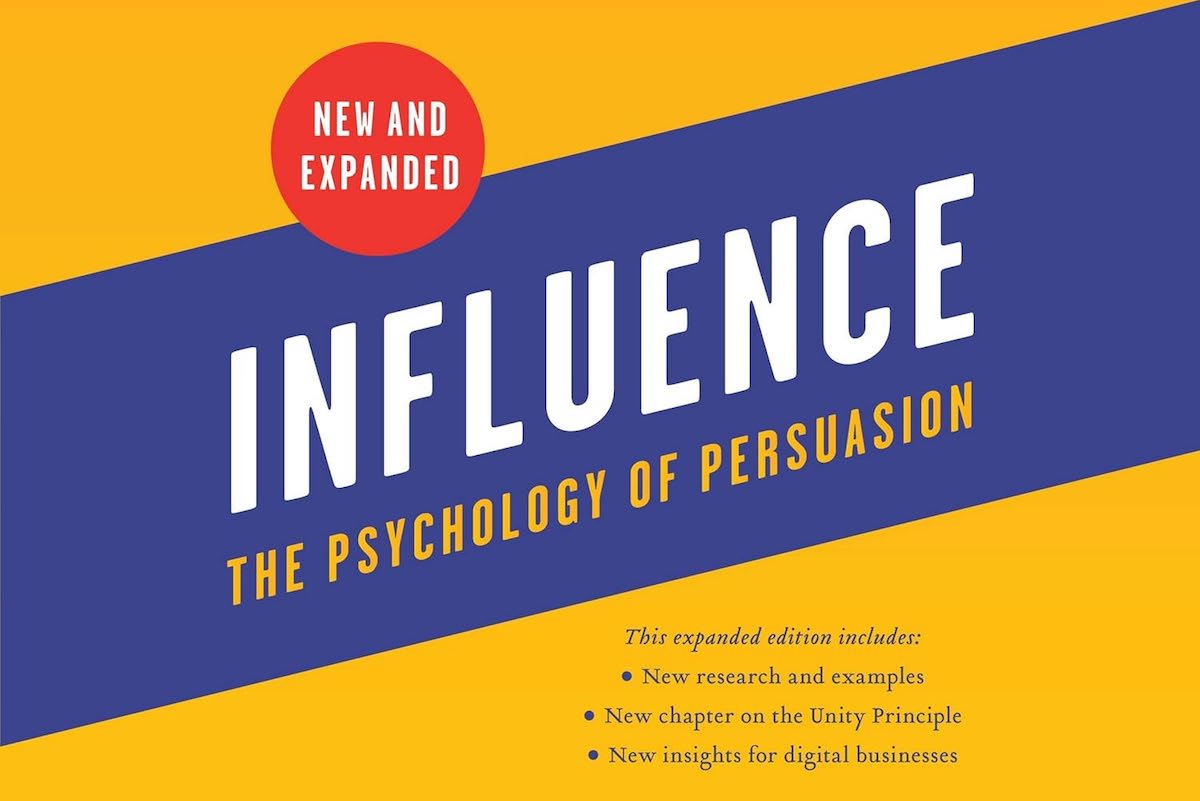
 If you’re interested in the psychology of persuasion, you need to read the new edition of Robert B. Cialdini’s highly acclaimed bestseller “Influence,” which will rewire your brain to notice subtle attempts at manipulation all around you in everyday life.
A fan likened the book to exploring the Moriarty of our minds, revealing the invisible strings that make us say yes when we might have said no. Each page is a detective story in its own right, unravelling the mysteries of human behavior in an engaging, enlightening, and downright entertaining way.
For example, in the chapter titled “Weapons of Influence,” Cialdini reveals one word that will instantly make you more persuasive and help you get what you want (emphasis ours):
Love reading and writing? Submit a post to our blog.
A well-known principle of human behavior says that when we ask someone to do us a favor we will be more successful if we provide a reason. People simply like to have reasons for what they do.
[Harvard social psychologist Ellen] Langer demonstrated this unsurprising fact by asking a small favor of people waiting in line to use a library copying machine: ‘Excuse me, I have five pages. May I use the Xerox machine because I’m in a rush?’ The effectiveness of this request-plus-reason was nearly total: 94 percent of those asked let her skip ahead of them in line.Compare this success rate to the results when she made the request only: ‘Excuse me, I have five pages. May I use the Xerox machine?’ Under those circumstances, only 60 percent of those asked complied.
At first glance, it appears that the crucial difference between the two requests was the additional information provided by the words ‘because I’m in a rush.’
But a third type of request tried by Langer showed that this was not the case. It seems that it was not the whole series of words, but the first one, ‘because,’ that made the difference.
Instead of including a real reason for compliance, Langer’s third type of request used the word ‘because’ and then, adding nothing new, merely restated the obvious: ‘Excuse me, I have five pages. May I use the Xerox machine because I have to make some copies?’ The result was that once again nearly all (93 percent) agreed, even though no real reason, no new information, was added to justify their compliance.
Complement this lesson on persuasion from “Influence” with our article about top influencers on X, formerly Twitter.

I’m a freelance writer with 6 years of experience in SEO blogging and article publishing. While you’re here, get the latest updates by subscribing to my newsletter.