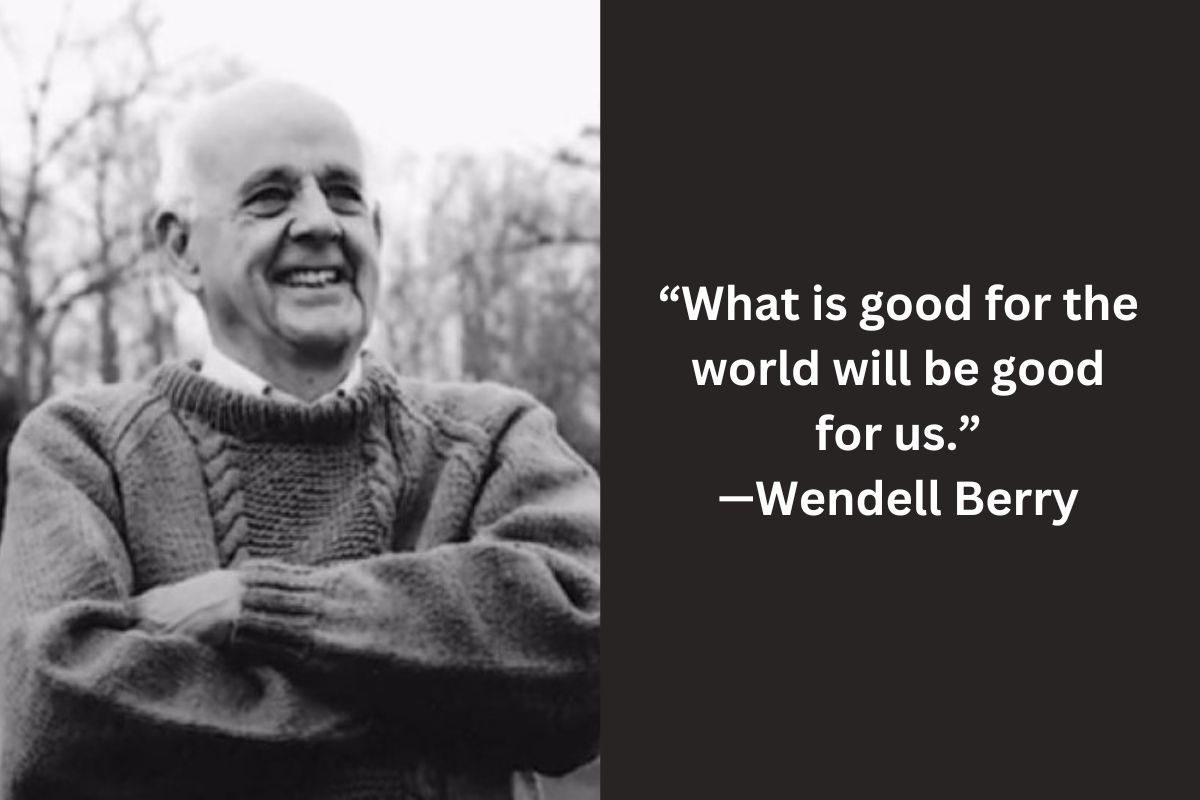
 “We have lived by the assumption that what was good for us would be good for the world,” Wendell Berry wrote in his beautiful paean to the world and all creation.
Then he added: “We have been wrong. We must change our lives, so that it will be possible to live by the contrary assumption that what is good for the world will be good for us.”
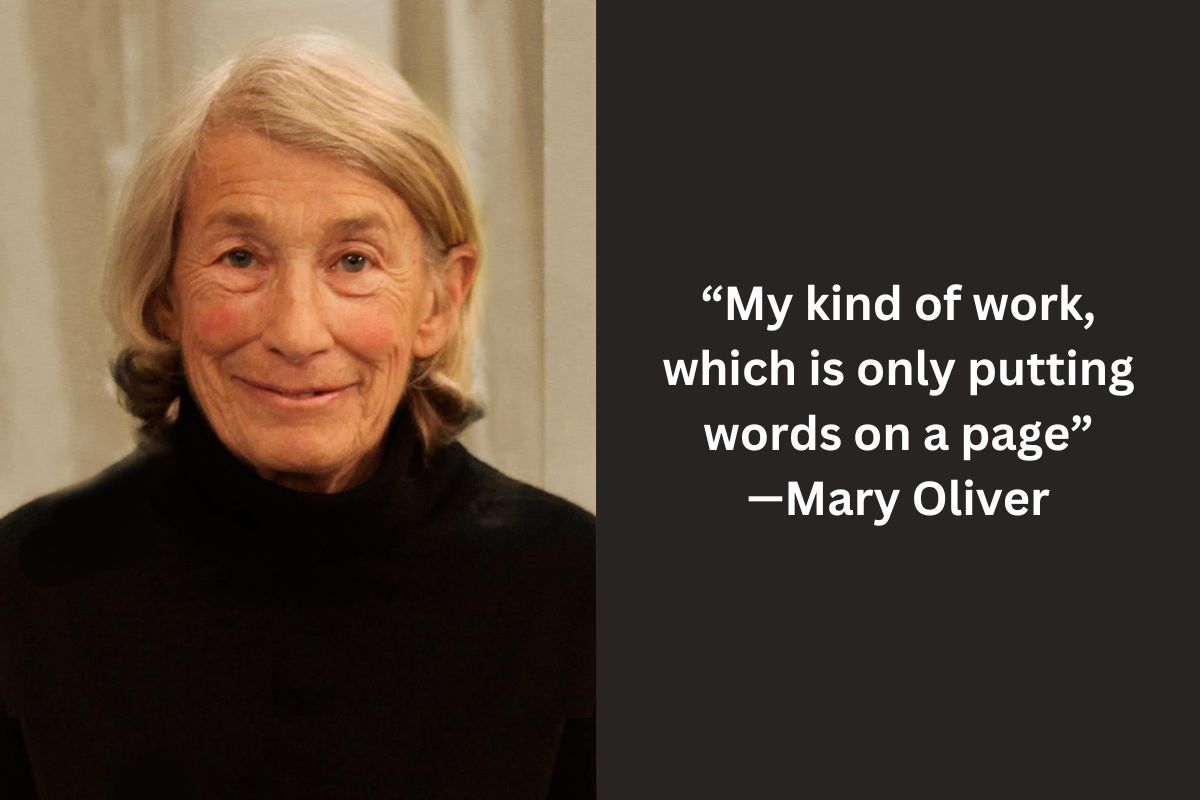
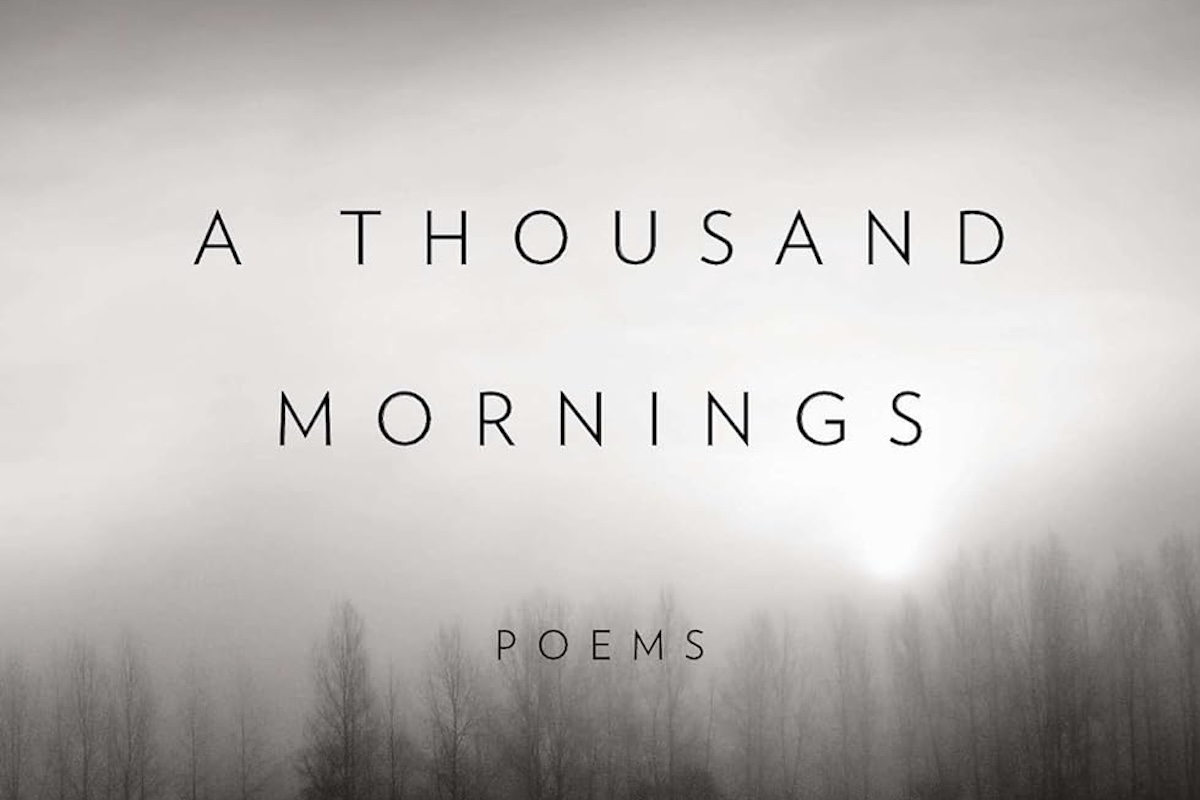
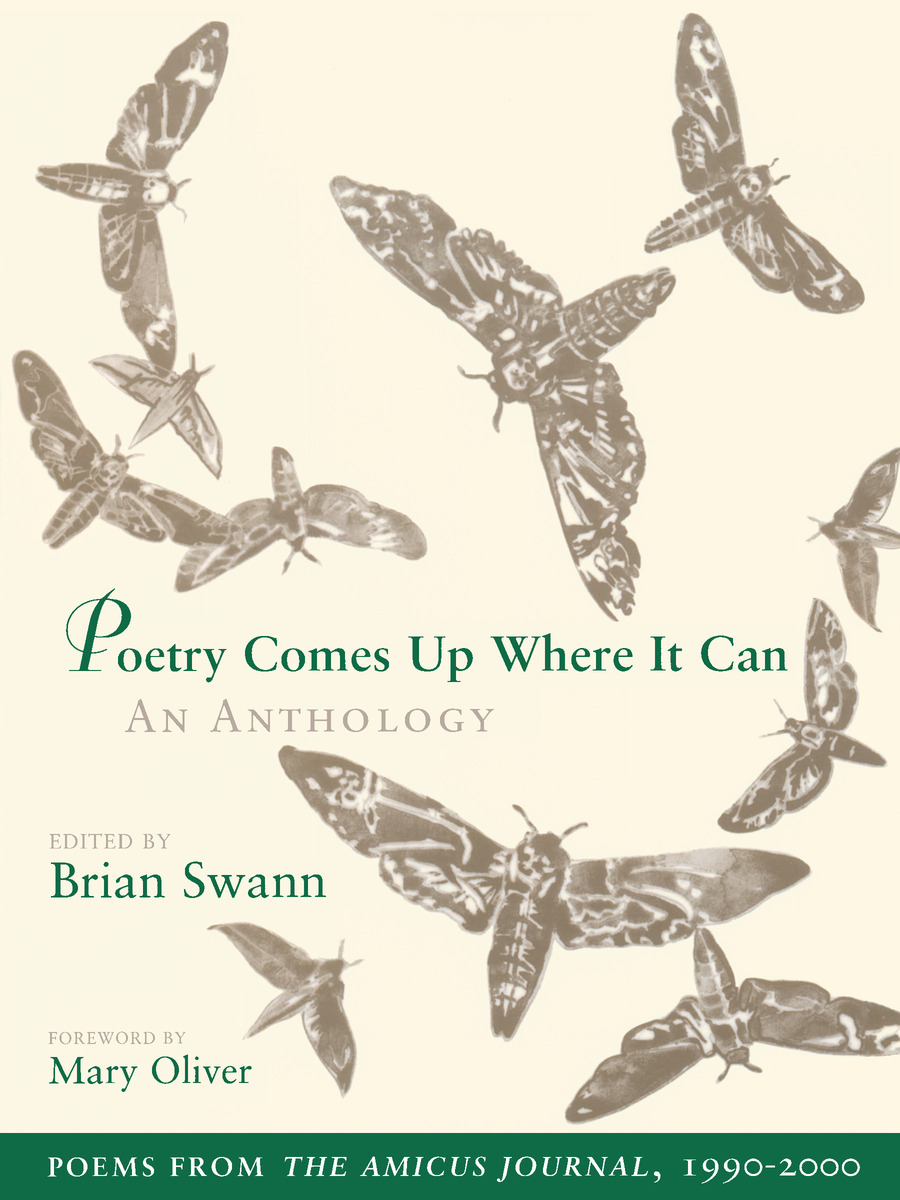
Mary Oliver (September 10, 1935–January 17, 2019), an American poet and nature lover, echoes this selfless meditation in the book “Poetry Comes Up Where It Can.”
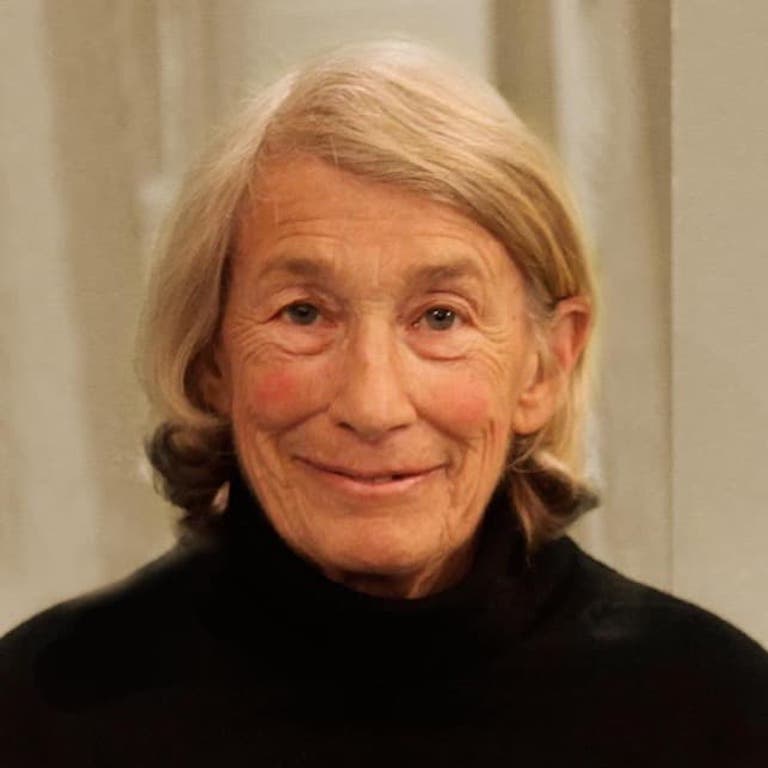
Mary Oliver writes:

Love reading and writing? Submit a post to our blog.
Previously there appeared such depth and abundance of everything around us that, whatever the forces of usage and change, it did not seem a matter for concern, or even serious thought. But now we have looked into the future, and we can see ahead of us: a dry, cold, dark, voiceless planet. Such is the possible future of everything, including ourselves. And the mystery, the mystery of all of it, of our lives and the lives of thrushes and wasps and clouds and the burning-bright tiger is not yet even begun to be understood! Such a thought should freeze the heart in its tracks.
But: enough. We have all heard the hard facts and the terrifying preordinations. What I want to talk about is love. For truth by itself is enfeebled; it is merely the truth; it is without force unless the heart’s desire is there too. Moreover my statements have already been too simple. As we cannot talk about human need and human progress and leave out the trees and the rivers, neither can we speak on behalf of wilderness and leave out hunger, disease, or other human misery.
In a sentiment that calls to mind John Seed’s famous call to go beyond anthropocentrism, Mary Oliver writes:
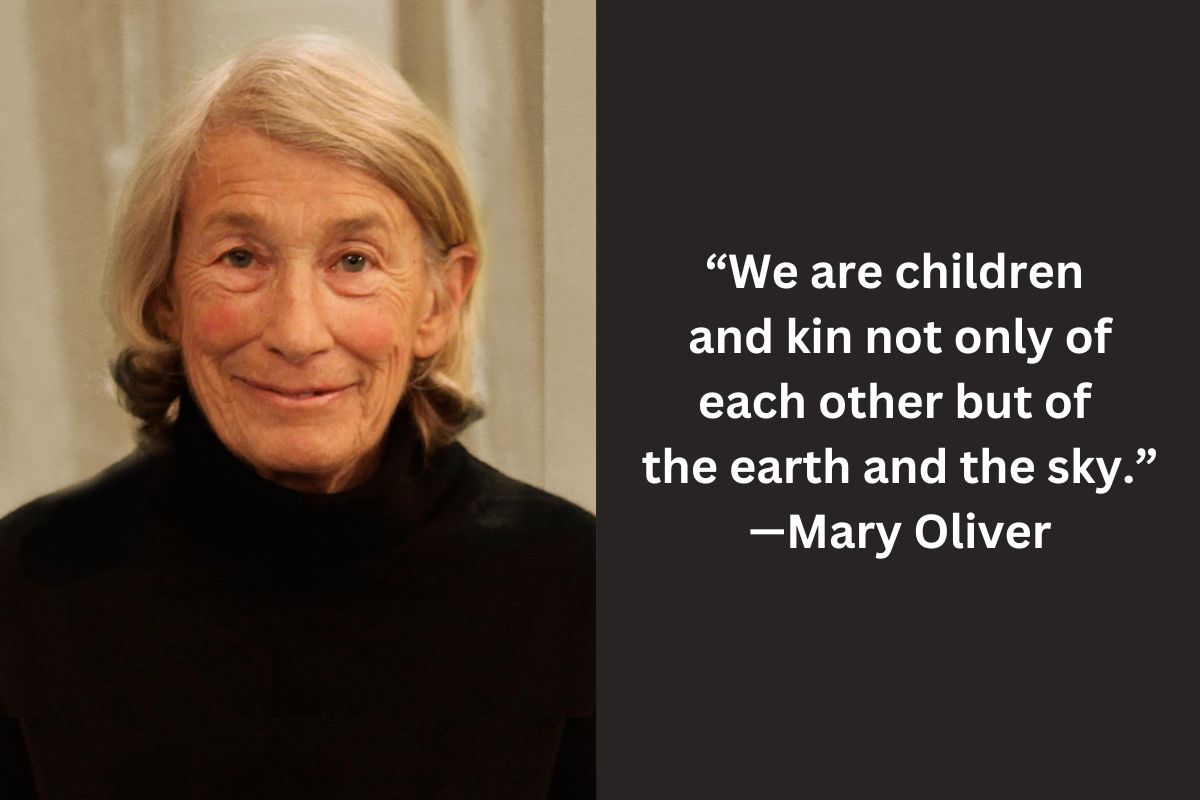
We are children and kin not only of each other but of the earth and the sky. The yardstick and the telescope, and the laser and the vaccines have altered our world and our lives. But there is still, in each of us, recognized or not, a desire and a need for bonding with the universe. It is this reaching out toward the nonhuman — the ultimate, the mystery — that can make of our brief lives something not only successful and cheerful and interesting but — I do not whisper the word but say it boldly — divine.
[…]Nature as it exists around us and as it exists in the mind has, over and over, since poetical and philosophical thought began, been interrupted in this way. Nature is not without destructive force, but it is without malice. It does not operate without nurturing and protecting in the context of self-interest, but it does so without greed. It has no ambition except to exist; it has a capacity for joyfulness, for idling, for refining the useful song into cadences of lyrical excess. It is an endless, rich invitation.
Mary Oliver concludes:
Long and complicated are the discussions that will bring help and health to everyone, and everything. But this I believe with all my heart: we must love not only each other, we must love our world. We must love the robin that sings in the green shade of the maple; the little monkey with the golden mantle, goblin of the rainforest; the banks of red roses flourishing on the pale dunes of the Provincelands; and even the beetle shining in the cup of the single rose.
Complement this selfless meditation from “Poetry Comes Up Where It Can” with John Seed on going beyond anthropocentrism and Wendell Berry on what is good for the world will be good for us.

I’m a freelance writer with 6 years of experience in SEO blogging and article publishing. While you’re here, get the latest updates by subscribing to my newsletter.