.
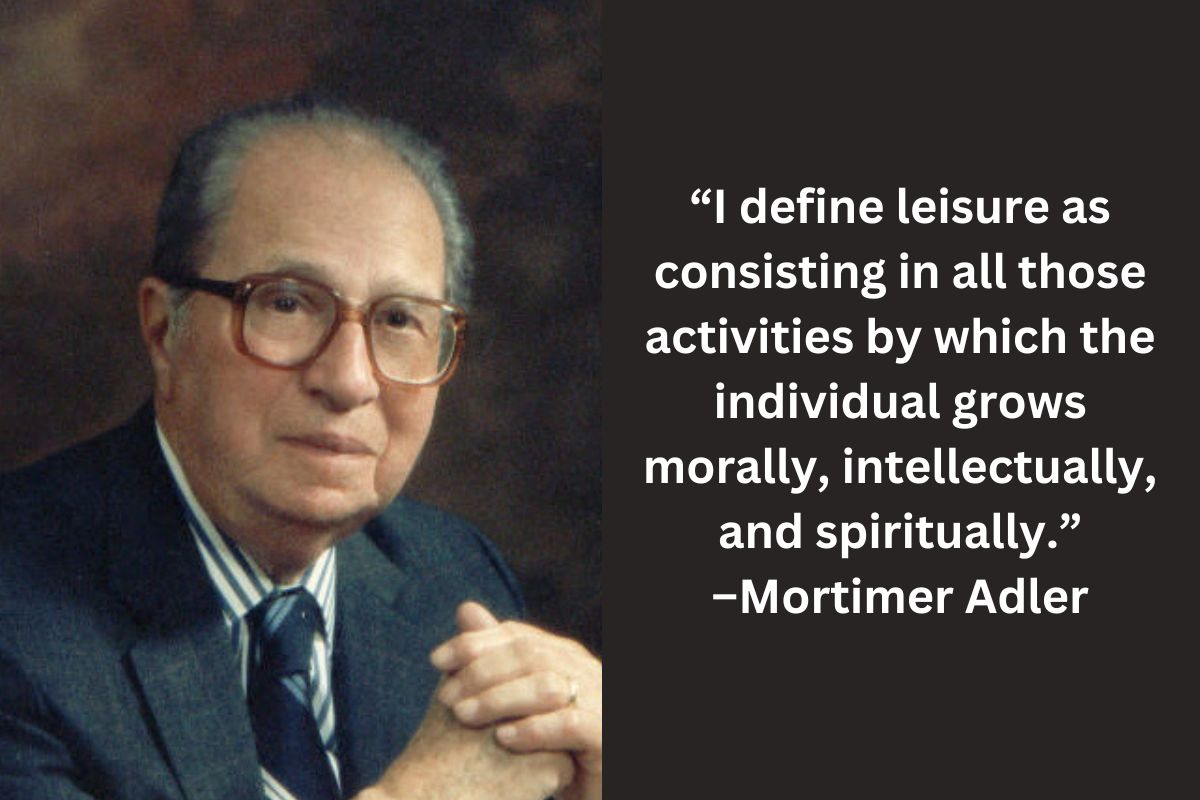
 When asked about their day, average Americans say, “I devote eight hours to sleep, eight hours to work, and I have eight hours … left over for free time.” So writes Mortimer J. Adler in his book “How to Think About the Great Ideas.”
Then he adds, “And the average American today would [also] use … three words, play, leisure, and rest, as if they meant the same thing, as filling for free time.”
To address these concepts, he first dismisses sleep as inactivity, or rather “biological activity,” and then goes on to discuss the difference between work, rest, play, and leisure. In this article, we’ll focus on Adler’s understanding of work vs. rest. He writes:

Love reading and writing? Submit a post to our blog.
[Work is] that which we must do in order to obtain our subsistence, that which keeps us alive, the goods we have to consume. And so if it is that which we must do in order to obtain our subsistence, then for the work we do we must be compensated, either directly in the form of consumable goods or with the money with which we buy consumable goods and the services we need.
Then he notes, “I want to discuss one very special notion that I think stands out from all the rest and which we should deal with quickly and put aside. And that is the notion … of rest”:
The text from Genesis reads, “And on the seventh day God ended his work and he rested on the seventh day from all his work.” … Now I’m sure we all understand that when it says in Genesis that God rested from all His work, it doesn’t mean that God slept or that God played.
Now then, following that text there is a very closely related text in Exodus. … ‘Remember the sabbath day, to keep it holy. Six days shalt thou labour, and do all thy work….
But the seventh day is the sabbath of the Lord thy God: in it thou shalt do not work, nor thy son, nor thy daughter, nor thy manservant, nor thy maidservant, nor thy cattle, nor thy stranger that is within thy gates:
For in six days the Lord made heaven and earth, the sea, and all that in them is, and rested on the seventh day: wherefore the Lord blessed the sabbath day, and hollowed it.’
Adler goes on to say that “keeping this day holy, hallowing it, is not something that can be done by sleeping all the Sabbath or playing all the Sabbath”:
I think … it means not merely rest as against work in our sense but rest as against all other normal, natural, everyday, human activity, including sleep and play and leisure activities.
For if resting on the Sabbath means keeping it holy, then the only thing it seems that the Old Testament could have in mind is religious worship on the Sabbath, the contemplation of God and the glorification of God.
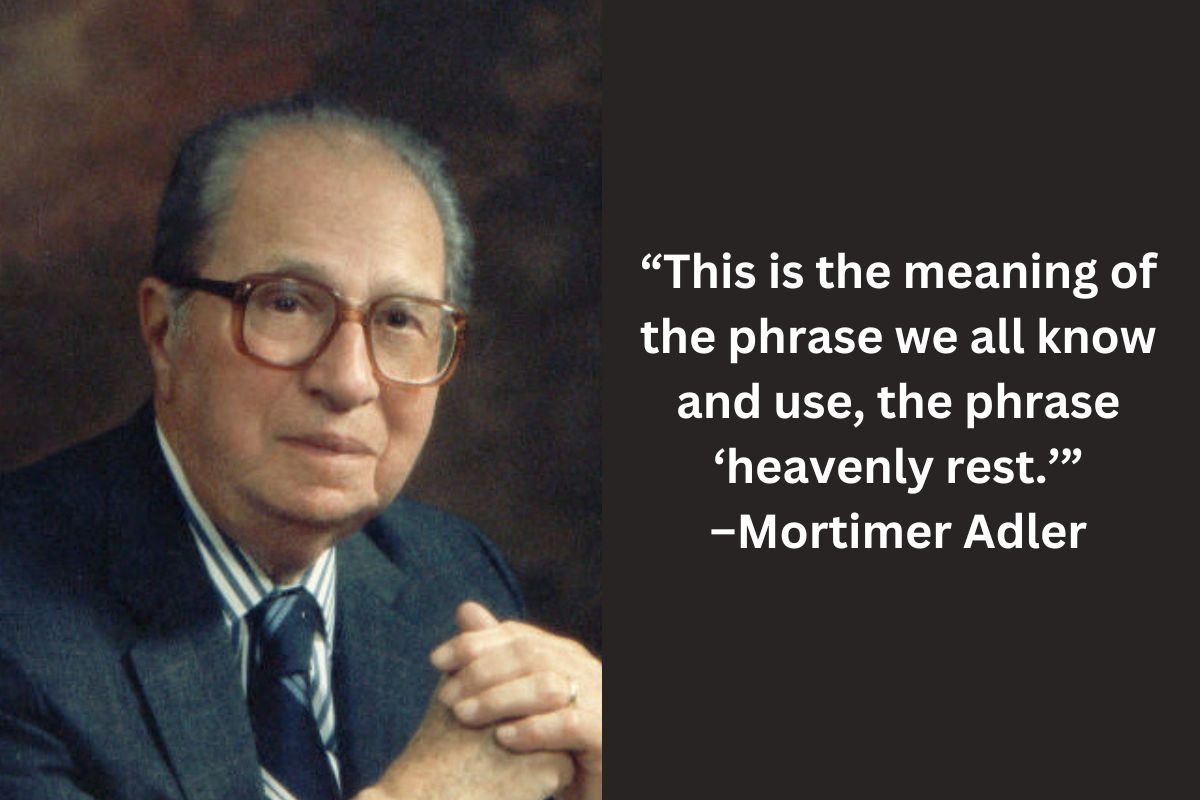
And this, I think, is the meaning of the phrase we all know and use, the phrase “heavenly rest.”
Complement these timeless musings from “How to Think About the Great Ideas” Richard Koch’s 10 golden rules of career success, and then revisit our article on the five major world religions.

I’m a freelance writer with 6 years of experience in SEO blogging and article publishing. While you’re here, get the latest updates by subscribing to my newsletter.