.
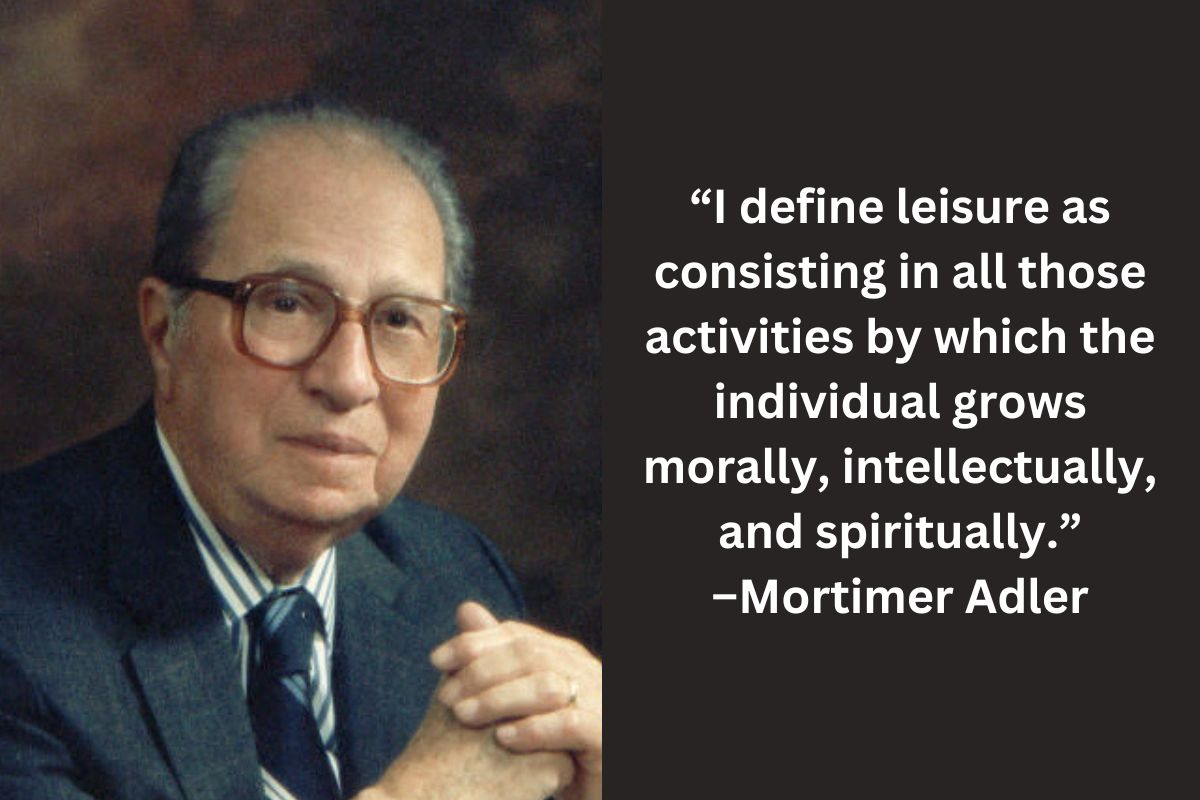
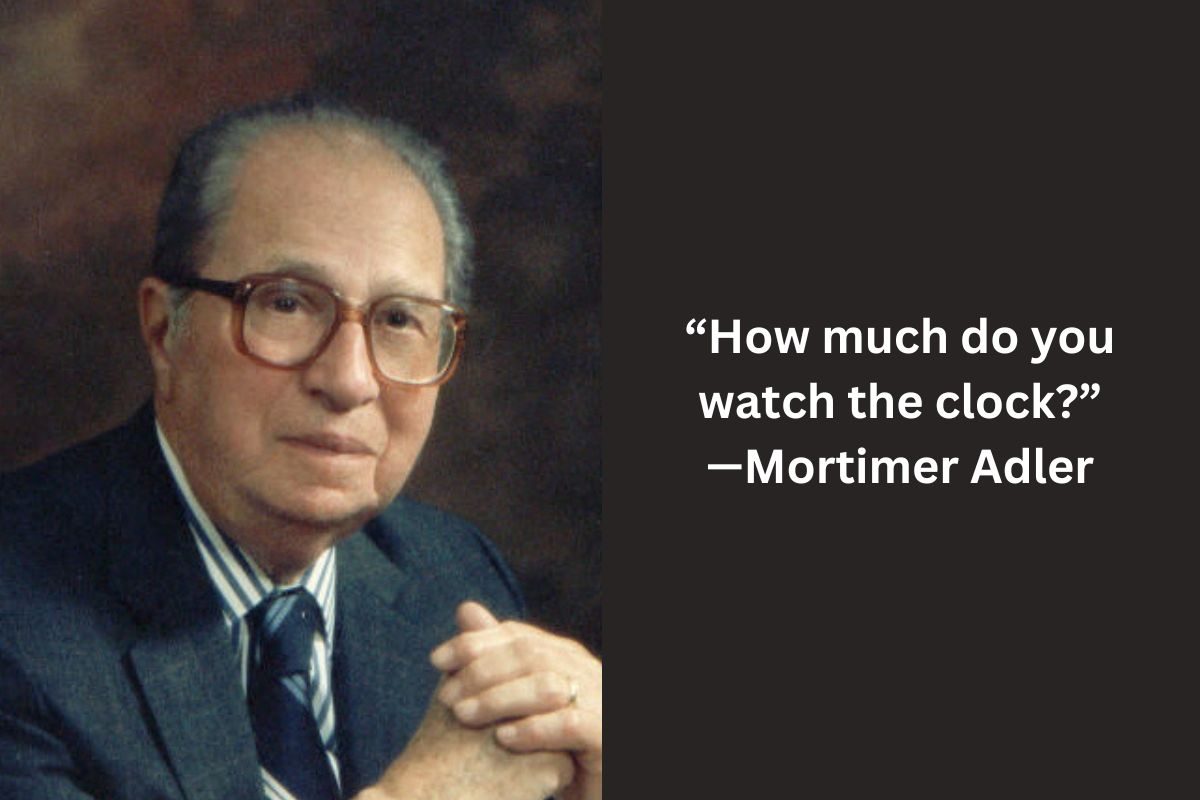
 Last week’s exploration of Karl Marx’s foundational essay on the nature of satisfying work reminded me of a similar piece titled “Drudgery and Labors of Love” by Mortimer Adler (December 28, 1902–June 28, 2001).
It’s included in his book “How to Think About the Great Ideas,” the same treasure trove of wisdom that gave us Adler on work vs. rest and play vs. leisure.
These distinctions serve as a starting point for Adler’s subsequent reflections on the crucial difference between servile and liberal work or, more precisely, “the grades of work from one extreme to the other, from the extreme of servile work at one end to the extreme of liberal work at the other.” Adler writes (emphasis ours):

Love reading and writing? Submit a post to our blog.
I would like to define for you the two extremes between which all human work falls. At one extreme I say we have the kind of work that should be called drudgery, completely servile work.
It is like the thing we called last time “chores,” except that in this case it is compensated. It is the kind of work that is repetitious day after day, that is stultifying to the human spirit and that no one would do except for the compensation; no one would choose to do these jobs if he could possibly avoid them and gain a living in some other way.
At the other extreme, Adler continues, we have the kind of work that can be called a “labor of love”:
The kind of work I would like to call a labor of love. The kind of work which is completely liberal. It is varied from day to day. It is self-improving rather than stultifying, and it is the kind of activity that a human being would perform or engage in even if he did not get compensated.
Even if he had a living from some other source, he would still do this kind of thing because it is exactly like leisure, self-rewarding, intrinsically satisfying.

Then he adds:
All the shades of work fall between these two extremes of drudgery at the bottom and labors of love at the top. All work is on a scale between those two. As one goes up the scale, one gets work that is more and more liberal. As one comes down the scale, one gets work that is more and more servile.
Everyone’s job, everyone’s way of earning a living involves some of the liberal, some of the servile, some aspect of leisure, some aspect of drudgery.
If you want to find out what kind of job you have — the amount of leisure or drudgery in it — you can ask yourself two questions. Adler writes:
[1.] Would you keep on doing it if you didn’t need to earn a living? If you wouldn’t — if you stopped tomorrow, if you had a living provided you, then I say it has a lot of drudgery in it.
And:
[2.] How much do you watch the clock? If the time of the working day is sharply divided from free time, the time left over for play and leisure, and you look at that clock and want the working day to come to an end, then it is full of drudgery.But if in your life the line between the working day and the leisure hours is a shadowy line, almost doesn’t exist, then your work goes right into leisure.
Complement these reflections from “How to Think About the Great Ideas” with our article about the hardest job in the world.
Editor’s note: the text was updated with links to related articles.

I’m a freelance writer with 6 years of experience in SEO blogging and article publishing. While you’re here, get the latest updates by subscribing to my newsletter.