.
 Writing is one of the greatest sources of joy in my life. When I’m engaged in this activity, time ceases to exist. The hard work of putting one word after another is so rewarding that nothing else matters — my problems, and even my entire self, dissolve in the process.
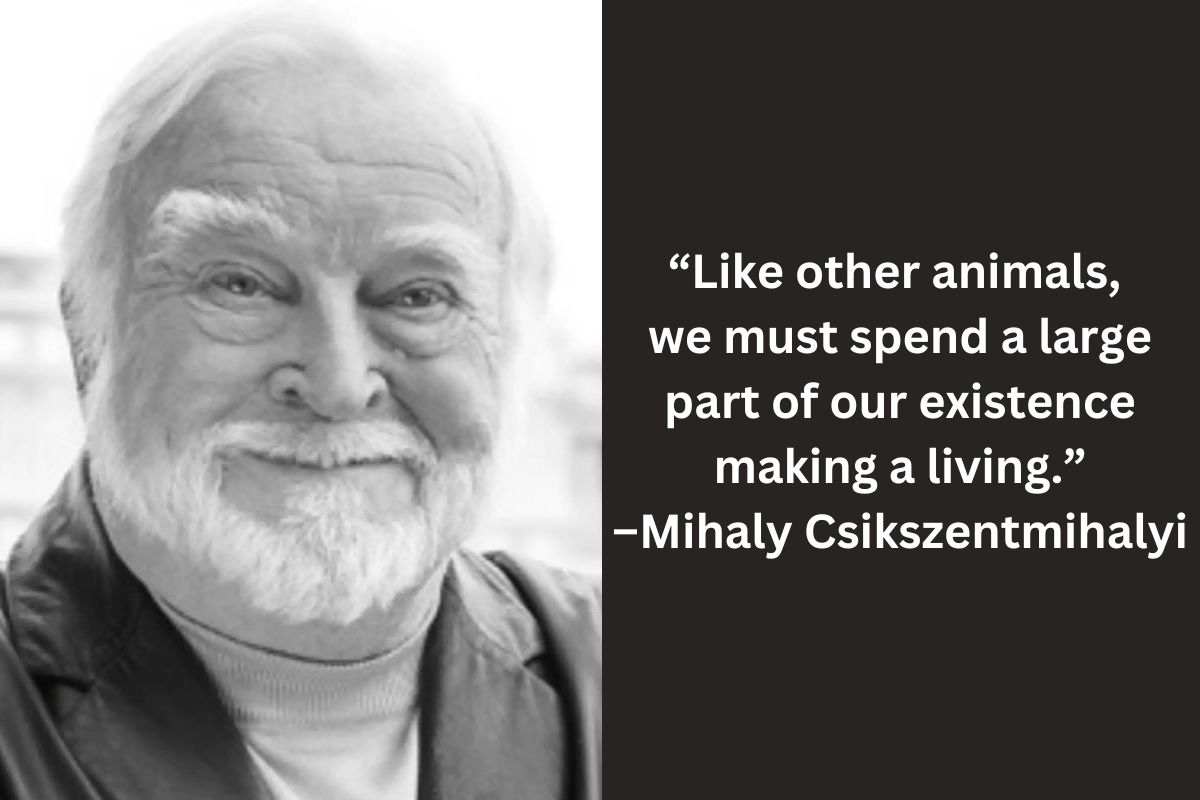
This is what Hungarian-American psychologist Mihaly Csikszentmihalyi (September 29, 1934–October 20, 2021) calls “optimal experience,” which is based on the concept of “flow.”
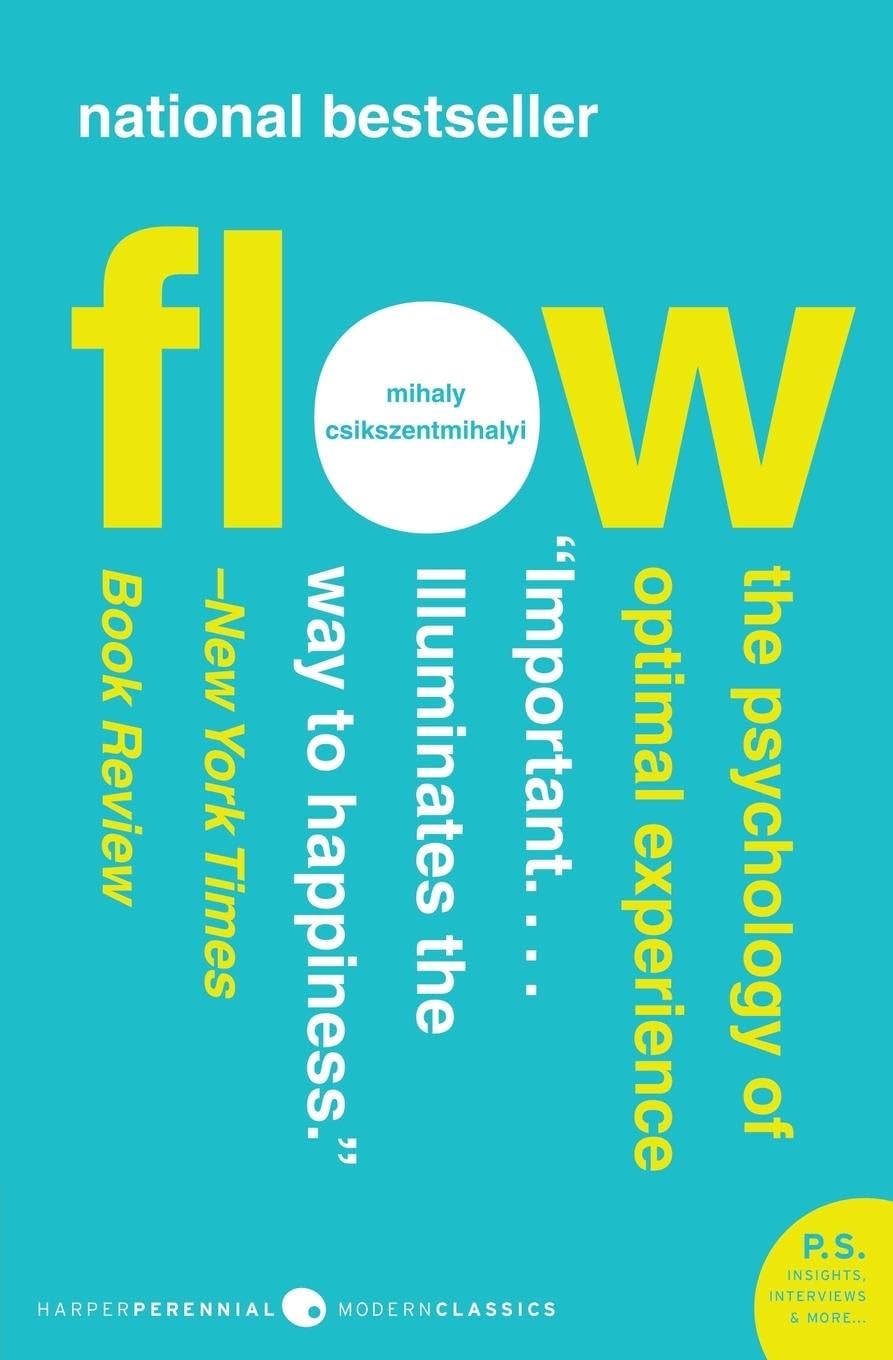
It’s also the title of his book “Flow” that explores the question, “When do people feel most happy?” He writes:

Love reading and writing? Submit a post to our blog.
What I “discovered” was that happiness is not something that happens. It is not the result of good fortune or random chance. It is not something that money can buy or power command. It does not depend on outside events, but, rather, on how we interpret them. Happiness, in fact, is a condition that must be prepared for, cultivated, and defended privately by each person. People who learn to control inner experience will be able to determine the quality of their lives, which is as close as any of us can come to being happy.
He then once again reiterates that this happiness doesn’t depend on outer circumstances of our lives, one of the reasons why it can be called “optimal experience:”
The instructions contained in our genes, the pull of gravity, the pollen in the air, the historical period into which we are born — these and innumerable other conditions determine what we see, how we feel, what we do. It is not surprising that we should believe that our fate is primarily ordained by outside agencies.
Yet we have all experienced times when, instead of being buffeted by anonymous forces, we do feel in control of our actions, masters of our own fate. On the rare occasions that happens, we feel a sense of exhilaration, a deep sense of enjoyment …. This is what [I] mean by optimal experience.
Then he adds:
There is no question that to survive, and especially to survive in a complex society, it is necessary to work for external goals and to postpone immediate gratification. But a person does not have to be turned in to a puppet jerked about by social controls.
The solution is to gradually become free of societal rewards and learn how to substitute for them rewards that are under one’s own powers. This is not to say that we should abandon every goal endorsed by society; rather, it means that, in addition to or instead of the goals others use to bribe us with, we develop a set of our own.
The most important step in emancipating oneself from social controls is the ability to find rewards in the events of each moment. If a person learns to enjoy and find meaning in the ongoing stream of experience, in the process of living itself, the burden of social controls automatically falls from one’s shoulders.
Mihaly Csikszentmihalyi concludes by describing what the Buddha — approximately a hundred years before Aristotle expounded his theory of happiness — called sati, or mindfulness:
It is by being fully involved with every detail of our lives, whether good or bad, that we find happiness, not by trying to look for it directly.

Here’s what you’ll learn by reading “Flow“ by Mihaly Csikszentmihalyi, in his own words:
Flow will examine the process of achieving happiness through control over one’s inner life. We shall begin by considering how consciousness works, and how it is controlled (chapter 2), because only if we understand the way subjective states are shaped can we master them. Everything we experience—joy or pain, interest or boredom—is represented in the mind as information. If we are able to control this information, we can decide what our lives will be like.
The optimal state of inner experience is one in which there is order in consciousness. This happens when psychic energy—or attention—is invested in realistic goals, and when skills match the opportunities for action. The pursuit of a goal brings order in awareness because a person must concentrate attention on the task at hand and momentarily forget everything else. These periods of struggling to overcome challenges are what people find to be the most enjoyable times of their lives (chapter 3).
To understand why some things we do are more enjoyable than others, we shall review the conditions of the flow experience (chapter 4). “Flow” is the way people describe their state of mind when consciousness is harmoniously ordered, and they want to pursue whatever they are doing for its own sake. In reviewing some of the activities that consistently produce flow—such as sports, games, art, and hobbies—it becomes easier to understand what makes people happy.
But one cannot rely solely on games and art to improve the quality of life. To achieve control over what happens in the mind, one can draw upon an almost infinite range of opportunities for enjoyment—for instance, through the use of physical and sensory skills ranging from athletics to music to Yoga (chapter 5), or through the development of symbolic skills such as poetry, philosophy, or mathematics (chapter 6).
Most people spend the largest part of their lives working and interacting with others, especially with members of their families. Therefore it is crucial that one learn to transform jobs into flow-producing activities (chapter 7), and to think of ways of making relations with parents, spouses, children, and friends more enjoyable (chapter 8).
Many lives are disrupted by tragic accidents, and even the most fortunate are subjected to stresses of various kinds. Yet such blows do not necessarily diminish happiness. It is how people respond to stress that determines whether they will profit from misfortune or be miserable. Chapter 9 describes ways in which people manage to enjoy life despite adversity.
And, finally, the last step will be to describe how people manage to join all experience into a meaningful pattern (chapter 10). When that is accomplished, and a person feels in control of life and feels that it makes sense, there is nothing left to desire. When that is accomplished, and a person feels in control of life and feels that it makes sense, there is nothing left to desire. The fact that one is not slim, rich, or powerful no longer matters. The tide of rising expectations is stilled; unfulfilled needs no longer trouble the mind. Even the most humdrum experiences become enjoyable.
Complement this theory of momentary happiness from “Flow” with the opposing theory of happiness as a quality of a complete life by Aristotle.

I’m a freelance writer with 6 years of experience in SEO blogging and article publishing. While you’re here, get the latest updates by subscribing to my newsletter.