 I never thought I’d become a Buddhist when I launched my mindfulness blog in 2017. It started as a secular practice: a few yoga classes during the week and daily meditation to soothe my mind. But as time went on, I noticed how good it was for well-being. So I decided to learn more about the subject. Eventually, my daily readings lead me to Buddhism.
I was lucky enough to stumble upon books by Bhikkhu Bodhi and Bhikkhu Analayo, who recently published their seminal works (you can learn about some of them in this article). Their clear explanations and step-by-step instructions helped me apply some of the Buddha’s teachings in my life. That was the point when my secular practice started to turn into a spiritual one. I don’t know all the answers yet because I’m still exploring this path.
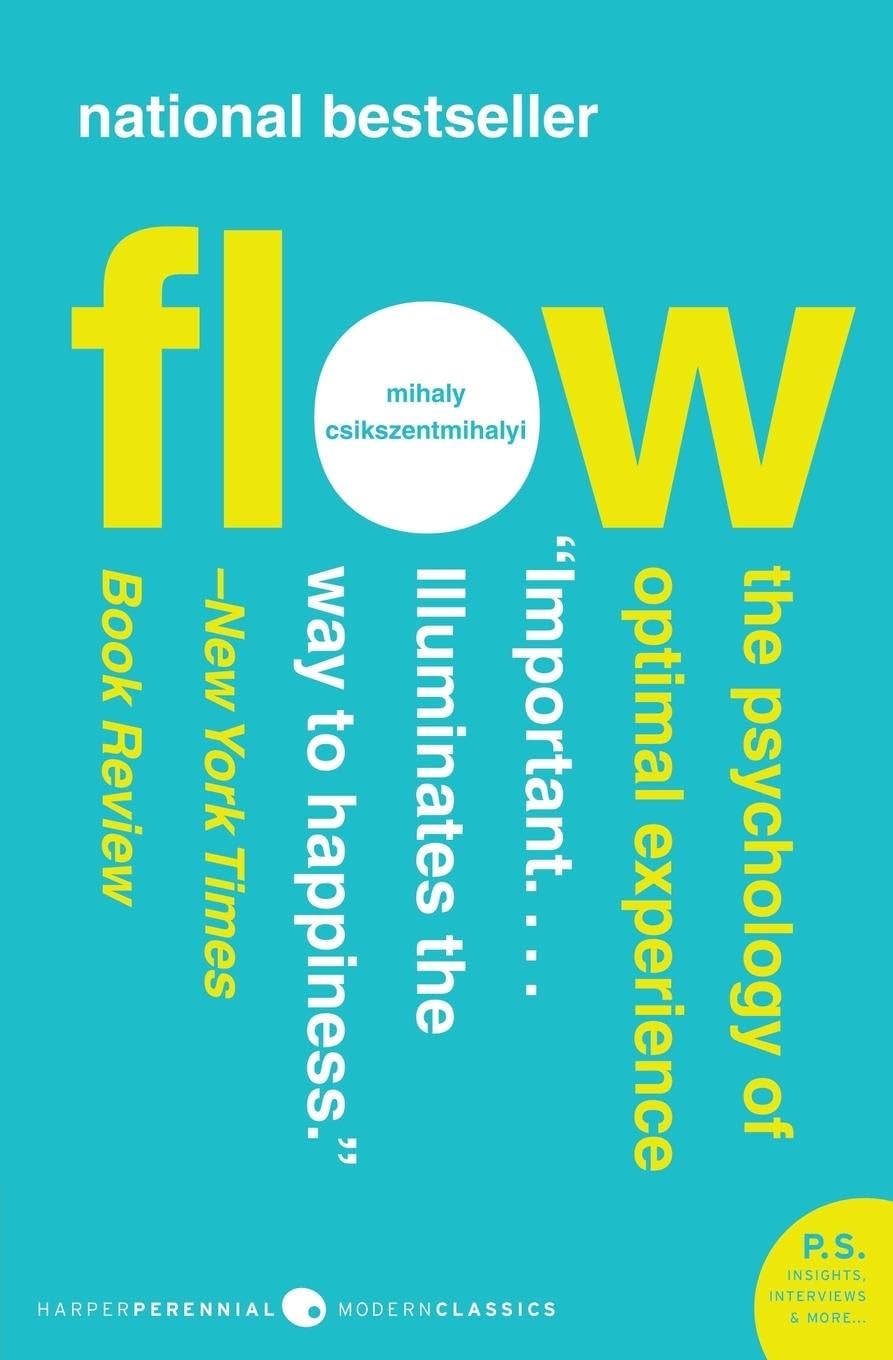
What I do know is that writing can help clear my own thinking around the question, “Do you really need religion in your life?” That’s why I want to share what Hungarian-American psychologist Mihaly Csikszentmihalyi (September 29, 1934–October 20, 2021) wrote about it in his book “Flow.”

Love reading and writing? Submit a post to our blog.
He starts by saying that religion, among other things, can be used to impose order on chaos, prevent psychic entropy, and find meaning in one’s life.

Mihaly Csikszentmihalyi writes:
If there is a strategy shared by … people who succeed in building meaning into their experience, it is one so simple and obvious that it is almost embarrassing to mention. Yet because it is so often overlooked, especially nowadays, it will be valuable to review it. The strategy consists in extracting from the order achieved by past generations patterns that will help avoid disorder in one’s mind.
There is much knowledge — or well-ordered information — accumulated in culture, ready for this use. Great music, architecture, art, poetry, drama, dance, philosophy, and religion [emphasis added] are there for anyone to see as examples of how harmony can be imposed on chaos. Yet so many people ignore them, expecting to create meaning in their lives by their own devices.
To do so is like trying to build up material culture from scratch in each generation. No one in his right mind would want to start reinventing the wheel, fire, electricity, and the million objects and processes that we now take for granted as part of the human environment.
Instead we learn how to make these things by receiving ordered information from teachers, from books, from models, so as to benefit from the knowledge of the past and eventually surpass it. To discard the hard-won information on how to live accumulated by our ancestors [emphasis added], or to expect to discover a viable set of goals all by oneself, is misguided hubris.
He then goes on to mention a seminar he ran for business managers on how to handle midlife crisis. And one of the ways he did that was beginning with a quick review of Dante’s “The Divine Comedy” because it was “written over six hundred years ago” and “was the earliest description I knew of a midlife crisis and its resolution.” He writes:
‘In the middle of the journey of our life,’ writes Dante in the first line of his enormously long and rich poem, ‘I found myself inside a dark forest, for the right way I had completely lost.’ … Wandering in the dark, Dante realizes that three fierce beasts are stalking him, licking their chops in anticipation. They are a lion, a lynx, and a she-wolf — representing, among other things, ambition, lust, and greed. …
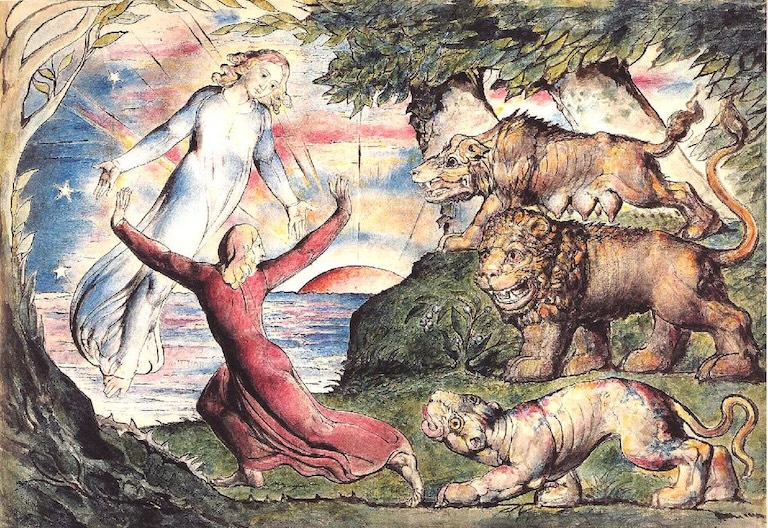
To avoid being destroyed by them, Dante tries to escape by climbing a hill. But the beasts keep drawing nearer, and in desperation Dante calls for divine help. His prayer is answered by an apparition: it is the ghost of Virgil, a poet who died more than a thousand years before Dante was born…. Virgil tries to reassure Dante: The good news is that there is a way out of the dark forest. The bad news is that the way leads through hell.
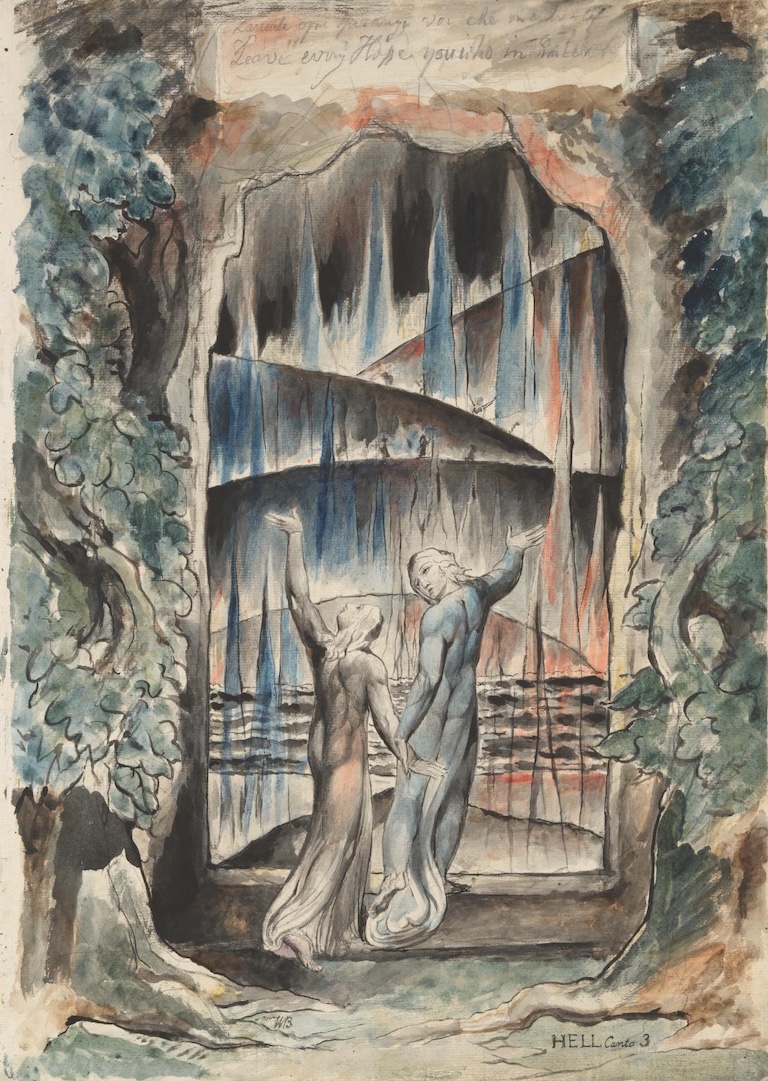
Then he adds:
Dante is an important model for another reason as well. Although his poem is informed by a deep religious ethic, it is very clear to anyone who reads it that Dante’s Christianity is not an accepted but a discovered belief. In other words, the religious life theme he created was made up of the best insights of Christianity combined with the best of Greek philosophy and Islamic wisdom that had filtered into Europe. …
[But] Dante [also] recognized that every system of spiritual order, when it becomes incorporated into a worldly structure like an organized church, begins to suffer the effects of entropy. So to extract meaning from a system of beliefs a person must first compare the information contained in it with his or her concrete experience, retain what makes sense, and then reject the rest.
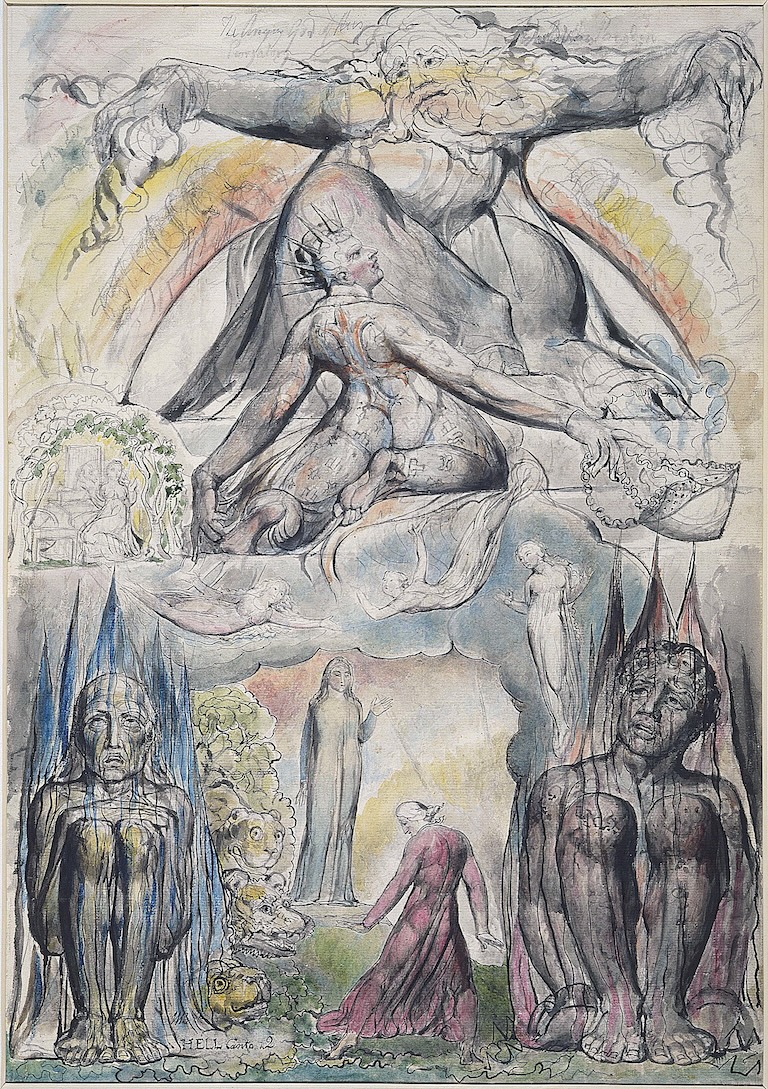
He continues:
One way to accomplish this is through the concept of evolution. Everything that matters most to us — such questions as: Where did we come from? Where are we going? What powers shape our lives? What is good and bad? How are we related to one another, and to the rest of the universe? What are the consequences of our actions? — could be discussed in a systematic way in terms of what we now know about evolution and even more in terms of what we are going to know about it in the future.
He concludes:
The obvious critique of this scenario is that science in general, and the science of evolution in particular, deals with what is, not with what ought to be. Faiths and beliefs, on the other hand, are not limited by actuality; they deal with what is right, what is desirable. But one of the consequences of an evolutionary faith might be precisely a closer integration between the is and the ought.
Complement this short meditation on religion with “The World’s Religions” by Huston Smith and then revisit Albert Einstein on the dichotomy of science and religion , Alan Watts on the decay of religion, the rise of science, and the hopeless world It produced, and our article on 5 major world religions.

I’m a freelance writer with 6 years of experience in SEO blogging and article publishing. While you’re here, get the latest updates by subscribing to my newsletter.