 Have you ever felt distracted on the job because you kept thinking about that one important task that was left unfinished the day before? Conversely, have you ever felt so immersed in the activity that hours felt like minutes and you found yourself working late into the night?
The former is an example of psychic entropy and the latter of “flow.” But what are they and their underlying mechanisms? To answer these questions, you have to understand how your consciousness works and how it can be disrupted.
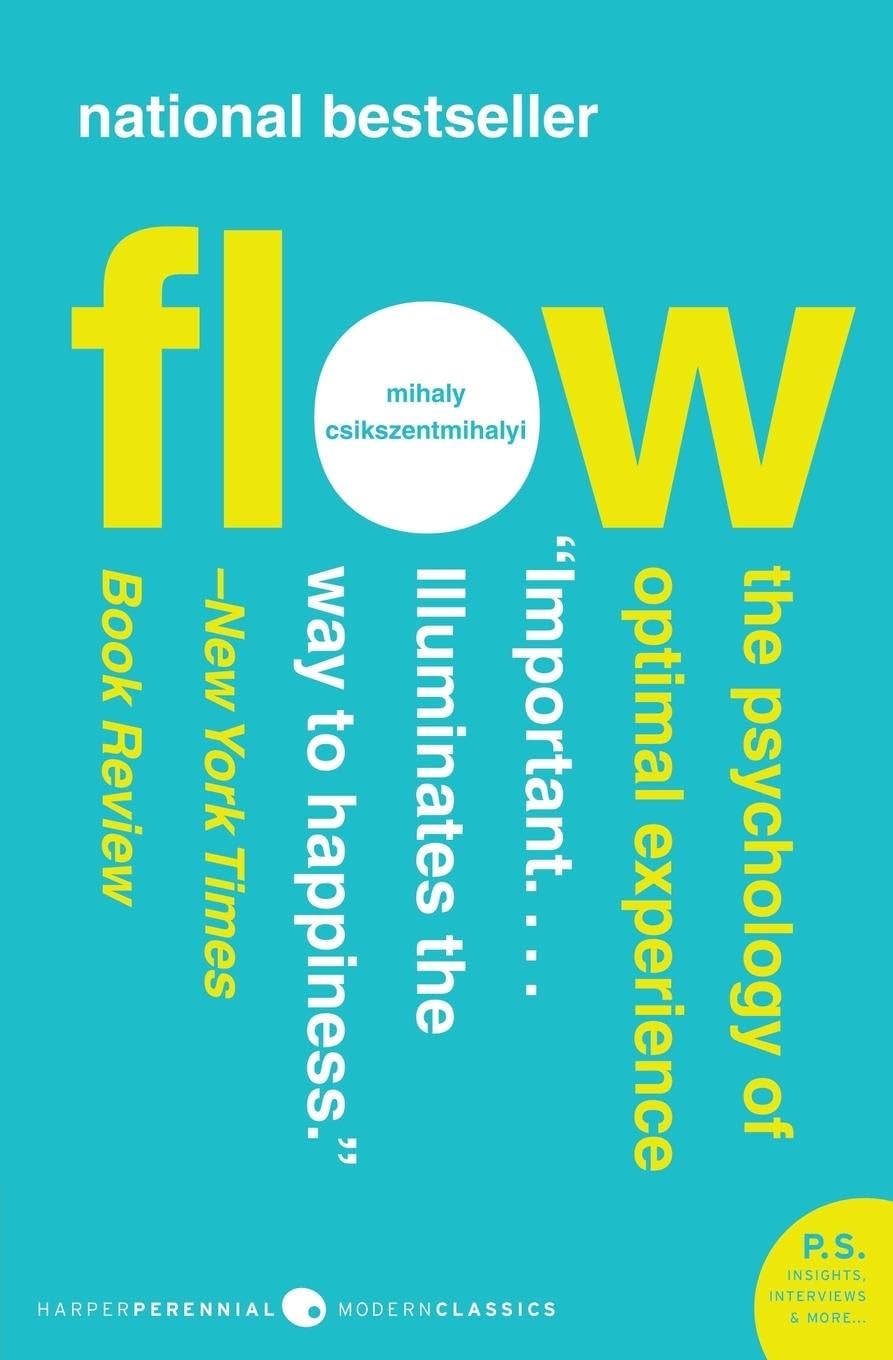
This is what Hungarian-American psychologist Mihaly Csikszentmihalyi (September 29, 1934–October 20, 2021) explores in his book “Flow: The Psychology of Optimal Experience.” He writes:

Love reading and writing? Submit a post to our blog.
Because no branch of science deals with consciousness directly, there is no single accepted description of how it works. Many disciplines touch on it and thus provide peripheral accounts. Neuroscience, neuroanatomy, cognitive science, artificial intelligence, psychoanalysis, and phenomenology are some of the most directly relevant fields to choose from;
However, trying to summarize their findings would result in an account similar to the descriptions the blind men gave of the elephant: each different, and each unrelated to the others. No doubt we shall continue to learn important things about consciousness from these disciplines, but in the meantime we are left with the task of providing a model that is grounded in fact, yet expressed simply enough so that anyone can make use of it.
Although it sounds like indecipherable academic jargon, the most concise description of the approach I believe to be the clearest way to examine the main facets of what happens in the mind, in a way that can be useful in the actual practice of everyday life, is “a phenomenological model of consciousness based on information theory.”
This representation of consciousness is phenomenological in that it deals directly with events—phenomena—as we experience and interpret them, rather than focusing on the anatomical structures, neurochemical processes, or unconscious purposes that make these events possible.
Csikszentmihalyi adds:
With this framework in mind, what, then, does it mean to be conscious? It simply means that certain specific conscious events (sensations, feelings, thoughts, intentions) are occurring, and that we are able to direct their course.
In contrast, when we are dreaming, some of the same events are present, yet we are not conscious because we cannot control them. For instance, I may dream of having received news of a relative’s being involved in an accident, and I may feel very upset. I might think, “I wish I could be of help.” Despite the fact that I perceive, feel, think, and form intentions in the dream, I cannot act on these processes (by making provisions for checking out the truthfulness of the news, for example) and hence, I am not conscious. In dreams we are locked into a single scenario we cannot change at will.
The events that constitute consciousness—the “things” we see, feel, think, and desire—are information that we can manipulate and use. Thus we might think of consciousness as intentionally ordered information.
This dry definition, accurate as it is, does not fully suggest the importance of what it conveys. Since for us outside events do not exist unless we are aware of them, consciousness corresponds to subjectively experienced reality. …
The reflection consciousness provides is what we call our life: the sum of all we have heard, seen, felt, hoped, and suffered from birth to death. Although we believe that there are “things” outside consciousness, we have direct evidence only of those that find a place in it.
He goes on to talk about how our consciousness can be disrupted (emphasis ours):
One of the main forces that affects consciousness adversely is psychic disorder—that is, information that conflicts with existing intentions, or distracts us from carrying them out.
We give this condition many names, depending on how we experience it: pain, fear, rage, anxiety, or jealousy. All these varieties of disorder force attention to be diverted to undesirable objects, leaving us no longer free to use it according to our preferences. Psychic energy becomes unwieldy and ineffective.
Then he provides an example:
Consciousness can become disordered in many ways. For instance, in a factory that produces audiovisual equipment, Julio Martinez—one of the people we studied with the Experience Sampling Method—is feeling listless on his job.
As the movie projectors pass in front of him on the assembly line, he is distracted and can hardly keep up the rhythm of moves necessary for soldering the connections that are his responsibility. …
Julio’s problem is simple, almost trivial, but it has been weighing heavily on his mind. One evening a few days earlier he noticed on arriving home from work that one of his tires was quite low. Next morning the rim of the wheel was almost touching the ground.
Julio would not receive his paycheck till the end of the following week, and he was certain he would not have enough money until then to have the tire patched up, let alone buy a new one. Credit was something he had not yet learned to use.
The factory was out in the suburbs, about twenty miles from where he lived, and he simply had to reach it by 8:00 A.M. The only solution Julio could think of was to drive gingerly to the service station in the morning, fill the tire with air, and then drive to work as quickly as possible. After work the tire was low again, so he inflated it at a gas station near the factory and drove home.
On the morning in question, he had been doing this for three days, hoping the procedure would work until the next paycheck. But today, by the time he made it to the factory, he could hardly steer the car because the wheel with the bum tire was so flat.
All through the day he worried: “Will I make it home tonight? How will I get to work tomorrow morning?” These questions kept intruding in his mind, disrupting concentration on his work and throwing a pall on his moods.
Csikszentmihalyi turns to the opposite condition (emphasis ours):
The opposite state from the condition of psychic entropy is optimal experience [or “flow”]. When the information that keeps coming into awareness is congruent with goals, psychic energy flows effortlessly.
There is no need to worry, no reason to question one’s adequacy. But whenever one does stop to think about oneself, the evidence is encouraging: “You are doing all right.” The positive feedback strengthens the self, and more attention is freed to deal with the outer and the inner environment.
Then he adds:
Another one of our respondents, a worker named Rico Medellin, gets this feeling quite often on his job. He works in the same factory as Julio, a little further up on the assembly line. The task he has to perform on each unit that passes in front of his station should take forty-three seconds to perform—the same exact operation almost six hundred times in a working day.
Most people would grow tired of such work very soon. But Rico has been at this job for over five years, and he still enjoys it. The reason is that he approaches his task in the same way an Olympic athlete approaches his event: How can I beat my record? Like the runner who trains for years to shave a few seconds off his best performance on the track, Rico has trained himself to better his time on the assembly line.
With the painstaking care of a surgeon, he has worked out a private routine for how to use his tools, how to do his moves. After five years, his best average for a day has been twenty-eight seconds per unit. In part he tries to improve his performance to earn a bonus and the respect of his supervisors.
But most often he does not even let on to others that he is ahead and lets his success pass unnoticed. It is enough to know that he can do it, because when he is working at top performance the experience is so enthralling that it is almost painful for him to slow down. “It’s better than anything else,” Rico says. “It’s a whole lot better than watching TV.”
Rico knows that very soon he will reach the limit beyond which he will no longer be able to improve his performance at his job. So twice a week he takes evening courses in electronics. When he has his diploma he will seek a more complex job, one that presumably he will confront with the same enthusiasm he has shown so far.

I’m a freelance writer with 6 years of experience in SEO blogging and article publishing. While you’re here, get the latest updates by subscribing to my newsletter.