 Would you keep doing what you’re doing if no one paid you for it? It’s an uncomfortable question, especially at a time of mass proliferation of AI and its threat to both white- and blue-collar jobs.
Perhaps, it should be reframed. Ask yourself, “Would Vincent van Gogh stop drawing if no one paid him for his paintings?” The answer — which I’ve explored in detail previously — is a resounding no; his drive existed entirely outside of a paycheck.
However, if we are honest with ourselves, most of us would find it difficult to provide that same defiant “no” regarding our own work. This suggests a fundamental change in our professional drive; to grasp why our experience of labor feels so transactional, we have to look past the tasks themselves and toward the underlying system.

Love reading and writing? Submit a post to our blog.
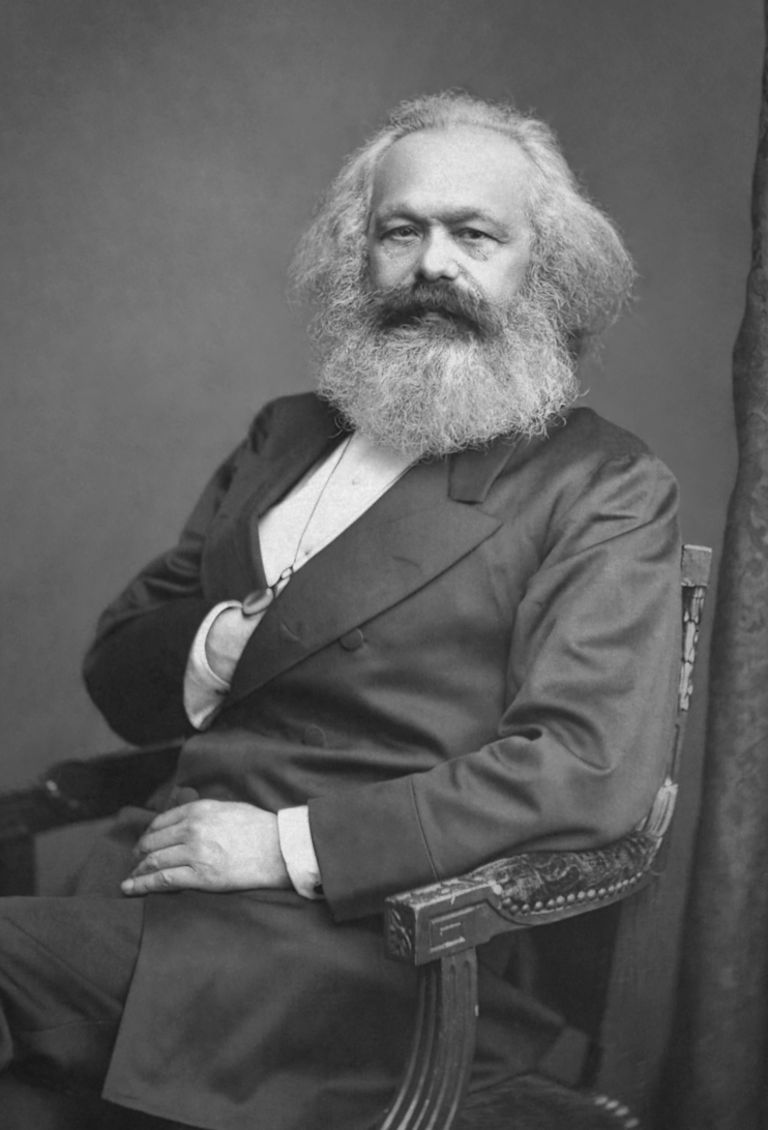
I’m talking about capitalism, the system Karl Marx (May 5, 1818–March 14, 1883) identified as the true culprit behind our professional dissatisfaction. Marx argued that under this model, a worker’s wretchedness increases in direct proportion to the magnitude of their production. The harder a worker works, the more they devalue themselves.
Here’s what Marx wrote in “Estranged Labour,” included in “Economic and Philosophic Manuscripts of 1844”:
On the basis of political economy itself, in its own words, we have shown that the worker sinks to the level of a commodity and becomes indeed the most wretched of commodities; that the wretchedness of the worker is in inverse proportion to the power and magnitude of his production.
What do you do if you want to earn more money? You work harder, right? In Marx’s period of capitalism, the harder you work, the more impoverished you become; the more you produce, the smaller price you get paid. As a result, you feel more and more alienated: You feel that you’ve become a commodity, somebody else’s tool. And for Marx, that is a symptom of an industrial system that produces wealth for the very few and a sense of alienation — what he calls self-estrangement — for the many.
Ideally, labor is how humans learn who they are and realize their capacities by seeing themselves reflected in the objects they create. A painter like Van Gogh pours his internal psyche into every brushstroke until the canvas becomes an extension of his soul, or a potter shapes a lump of clay into a vessel that carries the unique imprint of their hands and intent. Through these creations, the worker recognizes their own agency and humanity.
In capitalism, however, the product of labor is immediately taken away by someone else, breaking that vital connection. Marx writes:
The alienation of the worker in his product means not only that his labor becomes an object, an external existence, but that it exists outside him, independently, as something alien to him, and that it becomes a power on its own confronting him. It means that the life which he has conferred on the object confronts him as something hostile and alien.
Marx famously notes that the worker “only feels himself outside his work, and in his work feels outside himself”:
The worker therefore only feels himself outside his work, and in his work feels outside himself. He feels at home when he is not working, and when he is working he does not feel at home. … Lastly, the external character of labor for the worker appears in the fact that it is not his own, but someone else’s….
Thus, Marx sees a profound contradiction in how workers experience their humanity. Creative work — the ability to plan, use foresight, and create — is what makes us truly human. But under capitalism, this work, according to Marx, makes the worker feel like an animal controlled by others:
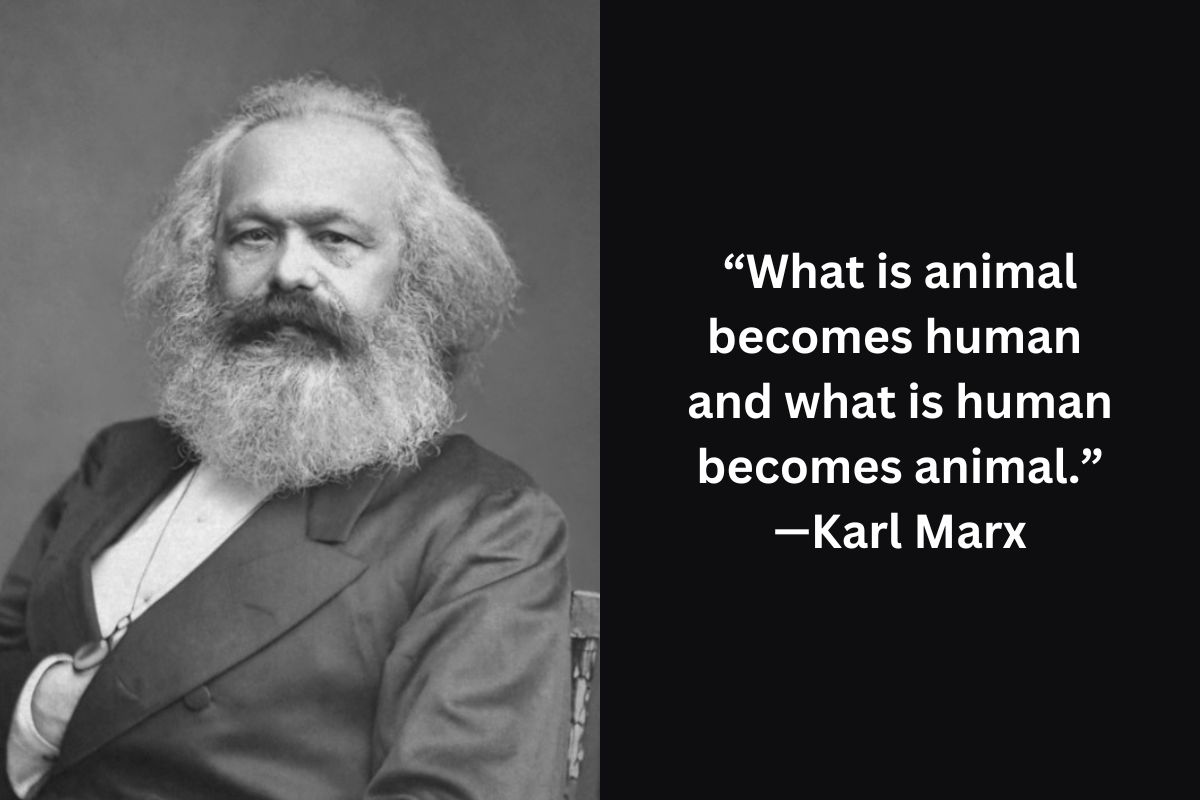
As a result, therefore, man (the worker) only feels himself freely active in his animal functions — eating, drinking, procreating, or at most in his dwelling and in dressing-up, etc.; and in his human functions [his work] he no longer feels himself to be anything but an animal. What is animal becomes human and what is human becomes animal.
Complement this excerpt from “Economic and Philosophic Manuscripts of 1844” with Mortimer Adler on work vs. rest, Mihaly Csikzentmihalyi on wasting your free time, Richard Koch on 10 golden rules of career success and the value of specialization, and then, for nothing more than sheer delight, revisit our article about the hardest job in the world.
Editor’s note: The text was updated with links to related articles.

I’m a freelance writer with 6 years of experience in SEO blogging and article publishing. While you’re here, get the latest updates by subscribing to my newsletter.