 We already know why the Socratic method is important in the age of AI. But the book of the same name claims that Socrates himself means little to many readers. They mostly associate him, its author notes, with the saying that the unexamined life is not worth living. And they know that his rational inquiries influenced others.
Most regrettably, though, a lot of people still think that Socrates went around annoying other people in ways that weren’t productive.
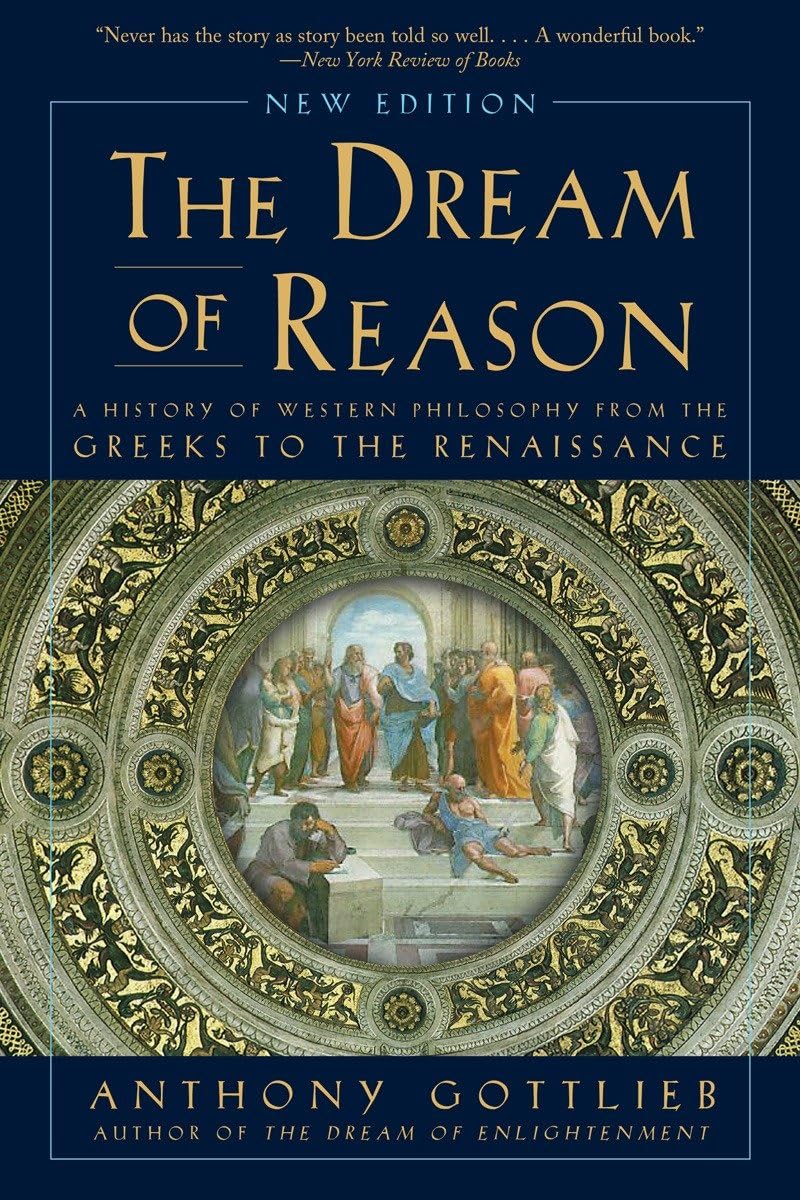
Anthony Gottlieb sets out to counter this tendency in his book “The Dream of Reason,” which gently reminds us of the vital relevance of Socrates’s teaching. “He tried to uncover the truth about things by playfully trying out various ideas on his hearers,” Gottlieb writes.
“I shall now piece together the theory of human life that lies behind Socrates’ apparently naive and implausible pronouncements,” he adds. “What emerges is a set of ideas that have proved to be, at the very least, extremely fruitful … in stimulating a great deal of subsequent moral philosophy.”

Love reading and writing? Submit a post to our blog.
Gottlieb goes on to unpack Socrates’ teaching on why a good man can never be harmed. He writes (emphasis ours):
Socrates’ theory starts and ends with the soul; in the “Apology,” he says that the most important thing in life is to look to its welfare. The soul, he says elsewhere, is that which is ‘mutilated by wrong actions and benefited by right ones.’
He does not mean the actions of others, but those of oneself. To do good is to benefit one’s own soul, and to do wrong is to harm it. Since the soul’s welfare is paramount, no other sort of harm is so important.
Nothing that other people can do to you can harm you enough to cancel out the benefit you bestow on yourself by acting rightly. It follows that bad people ultimately harm only themselves: ‘Nothing can harm a good man either in life or after death.’
“Socrates, therefore, has no fear of the court, which is trying him [in the “Apology”],” Gottlieb writes, adding:
He will not stoop to dishonorable behavior in order to win acquittal, for ‘the difficulty is not so much to escape death; the real difficulty is to escape from doing wrong, which is far more fleet of foot.’
One reason why it is hard to stop evil catching up with you is that if someone tries to do you wrong, it is often tempting to try to get your own back on them. But since it is always wrong to do evil — which would harm your soul whatever excuse for doing it might be — Socrates points out that one must never return evil for evil. In other words, one must turn the other cheek.
Gottlieb points out an apparent contradiction:
This conflicts with old Greek moral conventions, according to which it is acceptable to harm one’s enemies, though not one’s friends and especially not one’s family. The rigorous ethics of Socrates removes such distinctions between people and enjoins a universal morality instead.
One striking thing about it is that it does so by appealing to self-interest, not to the sort of altruistic feelings that are usually thought of as the main motive for moral behavior.
Doing good is a matter of looking after the part of yourself which matters most, namely your soul. This is not like ordinary selfishness, though, because the only way to achieve this sort of benefit for yourself is by acting justly and practicing the other virtues too. It cannot be gained by greedily putting your own interests above those of other people, but only by putting moral self-improvement above any other motive.
Gottlieb concludes:
This unusual ethics [does not] rest on any hope of heavenly reward or fear of its opposite. The benefits of virtue are reaped more or less immediately, for ‘to live well means the same thing as to live honorably,’ and the ‘just [man] is happy and the unjust miserable.’ In Socrates’ view, happiness and virtue are linked, which is why it is in people’s own interest to be moral.

I’m a freelance writer with 6 years of experience in SEO blogging and article publishing. While you’re here, get the latest updates by subscribing to my newsletter.