 Why do you choose one news source over another? Does its quality of judgment, tone, taste, and character play a part in your decision?
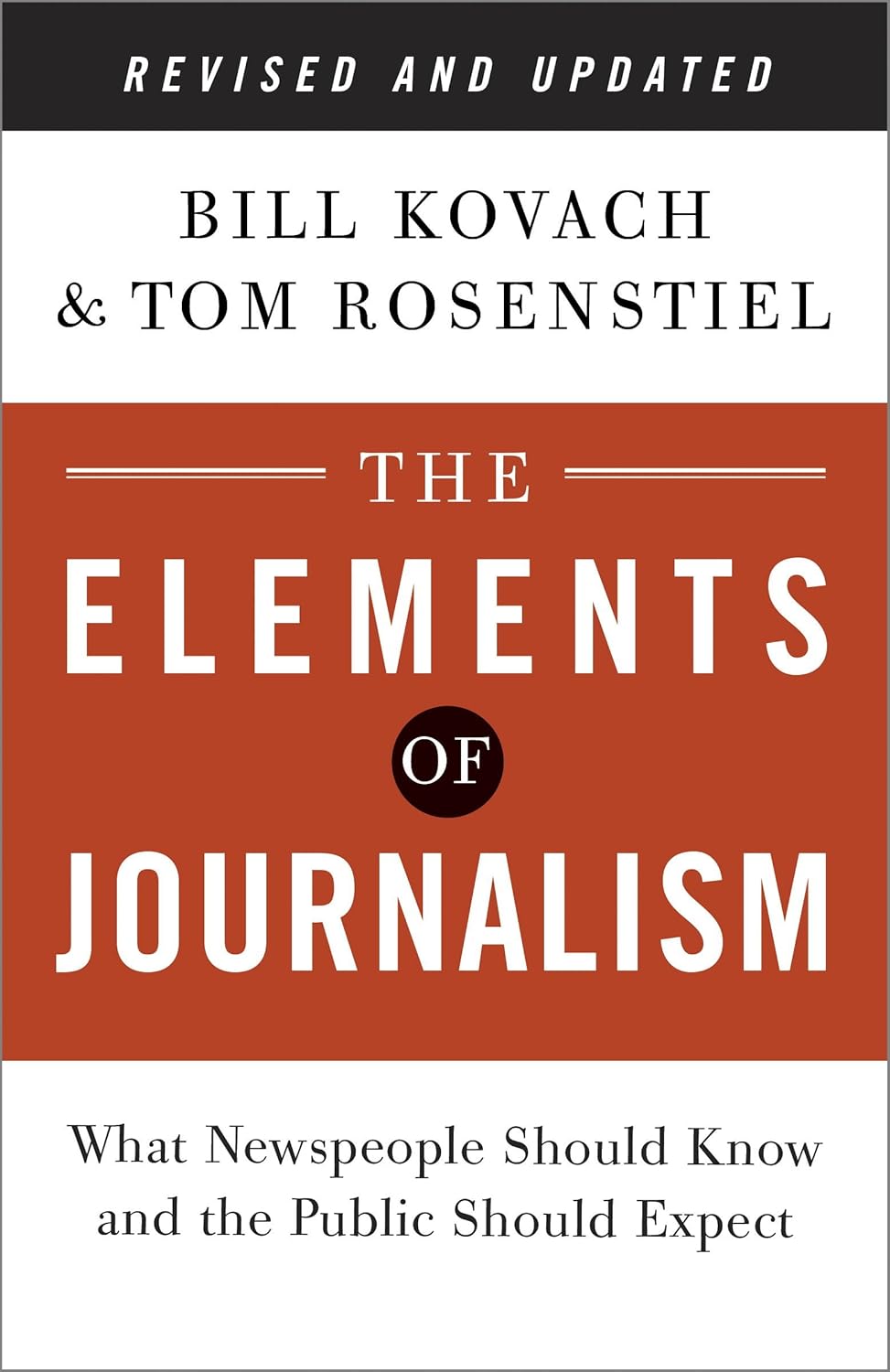
“As audiences we are guided by the decisions journalists make about what to report and how it is reported, and we are guided in our choice of news packages by a subtle combination of reasons, but this moral sense is part of it,” write the authors of “The Elements of Journalism.”
Then they add: “We are looking for information, but we are also looking for authority, for honesty, and for a sense that the journalists have our interests at heart.”
For journalists, however, exercising conscience is not easy. Innumerable obstacles make it difficult to produce news that is accurate, fair, and balanced:

Love reading and writing? Submit a post to our blog.
By necessity, newsrooms are not democracies — and that is even more the case in the age of layoffs, buyouts, and expanded use of low-paid or free contributors. The staffs who produce news have less leverage in that environment than before. By necessity, news operations also tend to be unruly dictatorships. Someone atop the chain of command has to make the ultimate decision — whether to publish, whether to stand by a piece of content, to leave in the damning quote or take it out, to pull down the controversial story or leave it up.
They continue:
And when revenue is scarce, and the business side is increasingly experimenting with ideas such as sponsored content (in effect advertising that looks more like editorial content), what formerly seemed hard ethical ground has become softer sand. Such factors are a significant issue facing journalism’s future, and that issue must be carefully managed, and thought through.
Despite these difficulties, the authors go on to assert that conscience is not something to be gotten past; it is something to be revered. That’s why news publishers need to build a culture that nurtures individual responsibility, and managers have to be willing to listen, not simply manage problems and concerns away:
We need our journalists to feel free, even encouraged, to speak out and say, “This story idea strikes me as racist,” or “You’re making the wrong decision,” or “I want to raise a concern about something on the site.” Only in a setting in which all can bring their diverse viewpoints to bear can the news have any chance of accurately anticipating and reflecting the increasingly diverse perspectives and needs of American culture.
The authors go on to say that journalists should feel that communicating to fellow citizens is a mission that transcends the institution where they work. Then they cite Gregory Favre, former editor of the Sacramento Bee, vice president of news for the McClatchy chain, and later a faculty member at the Poynter Institute, who often talked to journalists about this larger sense of mission:
You help people whether it’s a time of calm or whether it is a time of crisis. You help them speak to each other, allowing many voices to be heard, and providing them with information necessary to function as productive citizens. You help them build a bridge across their gulf of differences. And you have an obligation to question yourselves, just as you question others. An obligation to live and work by the same set of values that you ask of those you cover. An obligation to help bring about a change in the culture throughout our business, a culture that has a sense of caring, that demands diversity in our ranks, that has a human touch, internally and externally, a culture that is wrapped in a moral fabric that wont’ be ripped apart in the moments of tough times.
The authors conclude with a quote by writer Jon Katz:
I think you have to have a moral context in the work you do for it really to have any meaning. Whatever you do, I think you have to do it in a way that is morally satisfying to you.

I’m a freelance writer with 6 years of experience in SEO blogging and article publishing. While you’re here, get the latest updates by subscribing to my newsletter.