 The press no longer plays the role of a gatekeeper. It doesn’t decide what information the public should know and what it should not.
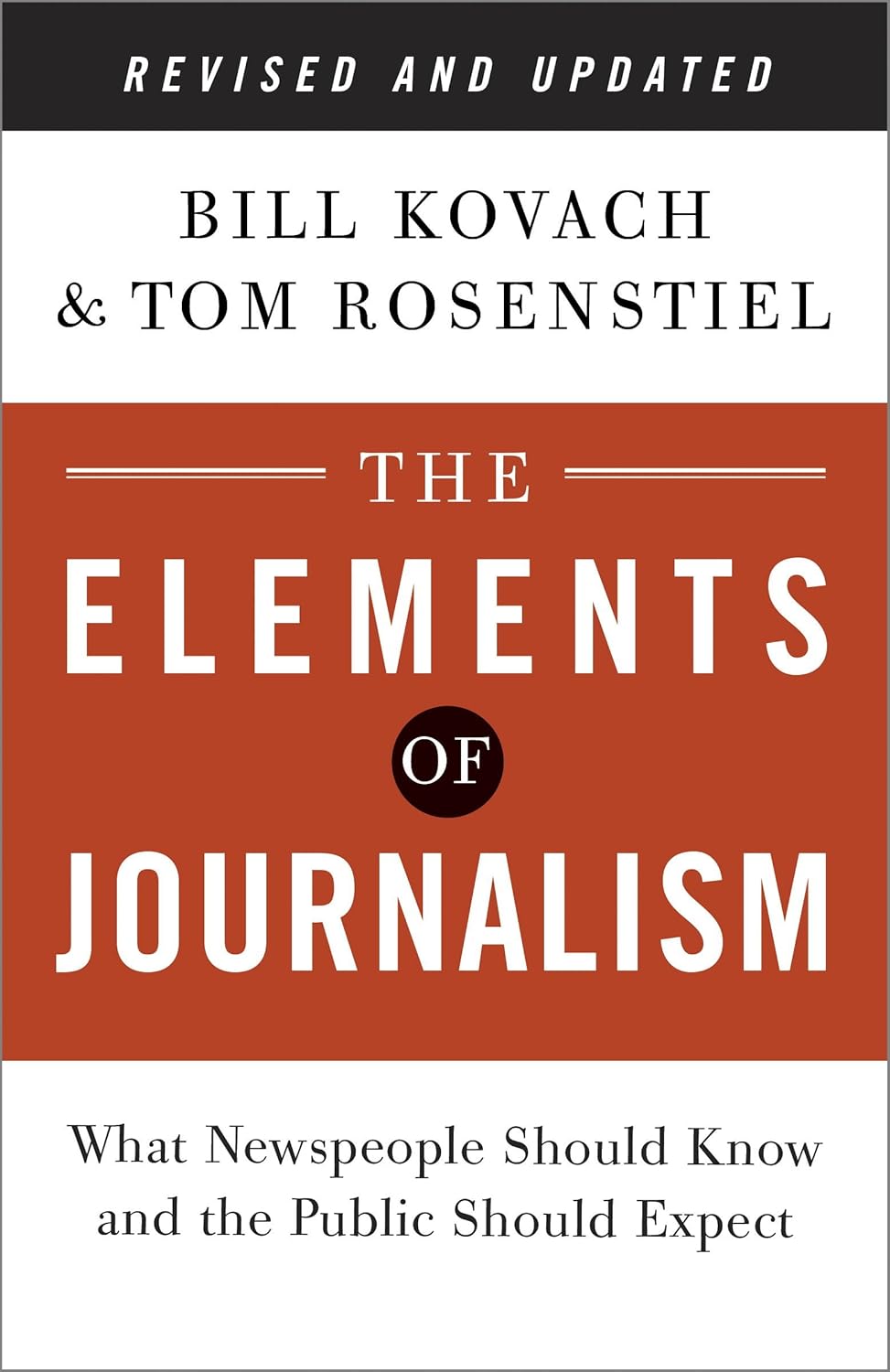
“If the New York Times decides not to publish something, one of countless other websites, talk radio hosts, social media networks, blogs, or partisans will,” write Bill Kovach and Tom Rosenstiel in their book “The Elements of Journalism: What Newspeople Should Know and the Public Should Expect.”
Then they add:

Love reading and writing? Submit a post to our blog.
In our 2010 book, “Blur: How to Know What’s True in the Age of Information Overload,” we argued that the gatekeeper metaphor masked behind one phrase what were really various different functions that the public required from journalism. We argued there that if those specific needs were recognized and understood more clearly, journalists were more likely to perform them more effectively, including understanding how better to collaborate with citizens and employ technology to create a better journalism.
The authors go on to list the four main tasks of journalism:
1. Authenticator
One primary task of the new journalist, as with the old, is to verify what information is reliable, to play the role of Authenticator. In the networked world, audiences may have heard differing assertions about an event before they encounter a formal journalistic account. Thus the role of the new journalist, more than the old, is to work with audiences to sort through these different accounts, to know which of the facts they may have encountered they should believe and which to discount.
2. Sense Maker
A second task of anyone trying to report and present news is to be a Sense Maker, to put events in context in a way that turns information into knowledge. … It is important for those who report news and information, for instance to know when they have moved from authenticating facts to synthesizing and contextualizing them. The analysis of events crosses into another level of subjectivity, and it requires making that shift clear by sharing different evidence for why this interpretation is likely the best one.
3. Witness Bearer
A third task is to Bear Witness to events. This occurs when the person functioning as journalist is the sole observer of an event. … It implies that institutional news organizations not deploy their resources only where there is already a crowd, and already an interest. Doing so makes a publisher less useful, even if it is the easiest way to generate traffic.
For a citizen who finds him- or herself at an event that citizen considers important, and where no press appear to be present, it may mean suddenly deciding to act journalistically, to tweet or take pictures or video — so there is a record.
4. Watchdog
A fourth task, closely related to witness bearer but also different, is Watchdog. This is the classic role of investigative reporting, uncovering wrongdoing. But it is sufficiently different in practice and organization from the more common but often undervalued role of witness bearing that it is important they are distinguished from each other. The more routine monitoring of witness bearing may be the spark that leads to the watchdog investigation.
The authors note that “in addition to the four roles listed above that were buried within the gatekeeper concept, there are at least five other distinct functions that the public requires of journalism … to help our lives”:
- Intelligent Aggregator (or Curator): Picking the best of other accounts, perhaps comparing the conflicting ones, recommending them to your audience — playing editor, in effect, of the rest of the information available.
- Forum Leader: Organizing public discussion in a way that reflects your journalistic values.
- Empowerer: Providing audiences tools and information so that they can act for themselves. This involves making information interactive, providing dates when action needs to be taken, explaining how to get more involved. It may go even further and involve organizing events that bring the community together to solve problems.
- Role Model: In a networked news environment, journalism is an even more public act than before. How one gathers the news, one’s conduct and decision making are being watched. That behavior must be exemplary, for it is, in a more explicit way than was once true, part of the brand.
- Community Builder: In older models of journalism, the news spoke for itself, and what citizens did with that news and information was beyond the sphere of the news provider. That is no longer the case. The purpose of news is to help people self-govern, but that only begins with giving them the information they need to do so. News must also be about solving the problems that confront individuals and the community. There are lines between news and advocacy, but helping solve problems is different from advocacy.
Complement “The Elements of Journalism” with our articles on what is journalism for, best journalism books for beginners, the four principles of ethical journalism, and Mortimer Adler, who said, “All things noble are as difficult as they are rare.”

I’m a freelance writer with 6 years of experience in SEO blogging and article publishing. While you’re here, get the latest updates by subscribing to my newsletter.