 If you ask Buddhist monks — who are known for their cultivated disposition toward good behavior — how to handle insults, they will reveal an approach that is equal parts paradoxical and profound.
Whenever you’re insulted, they would say to you, steer your mind toward this wholesome thought: “There is no person insulting me but only the five aggregates of mental and physical phenomena that have already vanished at the moment of insult. If I remain angry, that would involve being angry with the subsequent phenomena, which would be similar to a person who hates the parents but takes revenge on their children or grandchildren after the parents have passed away.”
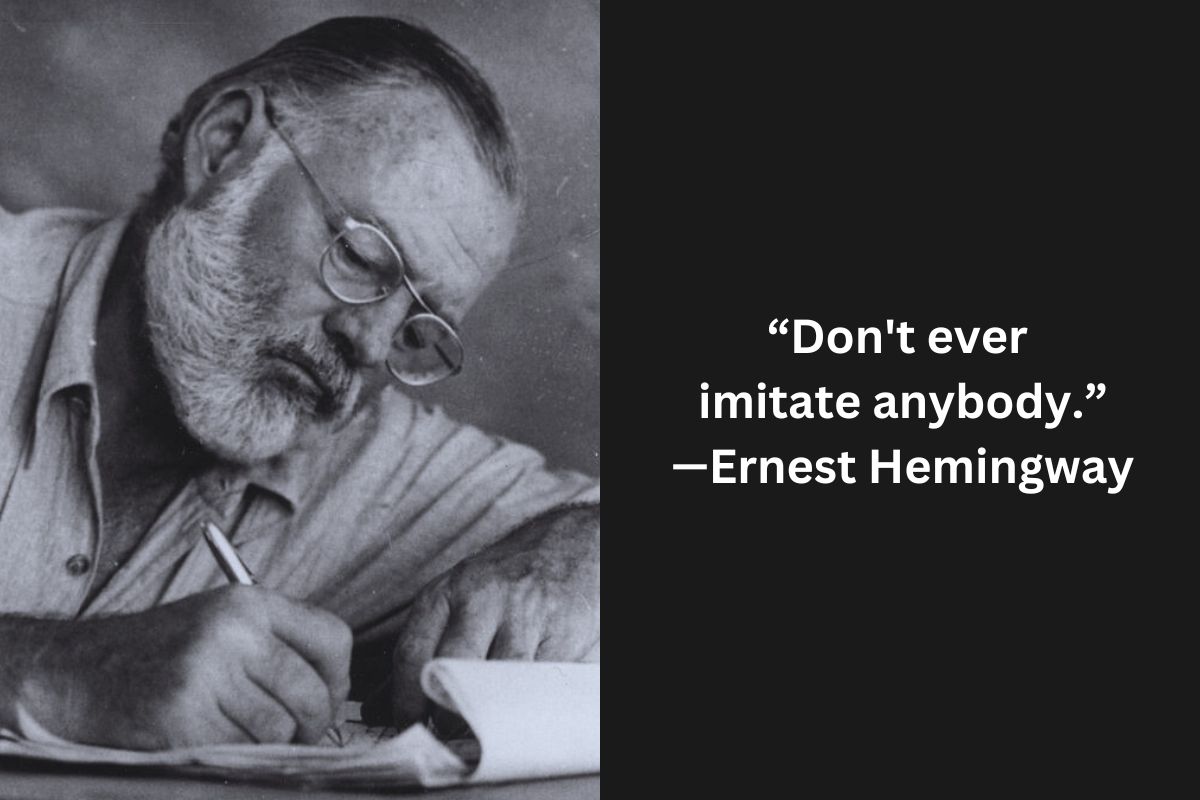
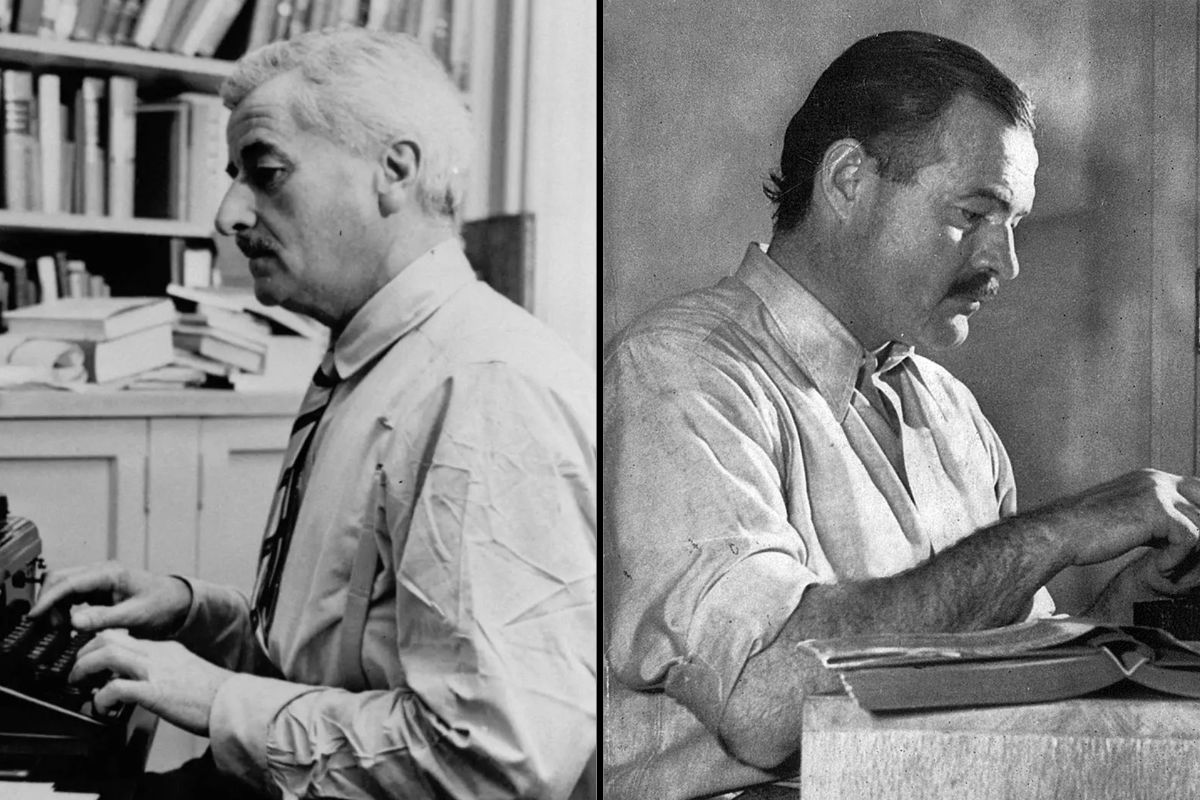
That is certainly not what William Faulkner (September 25, 1897–July 6, 1962) and Ernest Hemingway (July 21, 1899–July 2, 1961) had in mind when they exchanged bitter literary insults. Here’s how it unfolded.
Love reading and writing? Submit a post to our blog.
In 1947, William Faulkner was invited to teach a creative writing class at the University of Mississippi. One of the most interesting outcomes of his visit was a list of “the five most important contemporary writers,” which he compiled during the Q&A session with students:
- Thomas Wolfe
- John Dos Passos
- Ernest Hemingway
- Willa Cather
- John Steinbeck
When asked to rank himself, Faulkner amended the list in the following way:
- Thomas Wolfe
- William Faulkner
- John Dos Passos
- Ernest Hemingway
- John Steinbeck
What’s even more interesting is his comment about Hemingway in the amended list:
He has no courage, has never crawled out on a limb. He has never been known to use a word that might cause the reader to check with a dictionary to see if it is properly used.
Hemingway, as you can imagine, was not pleased with Faulkner’s remark. So he issued the following reply:
Poor Faulkner. Does he really think big emotions come from big words? He thinks I don’t know the ten-dollar words. I know them all right. But there are older and simpler and better words, and those are the ones I use.
In a later exchange, Faulkner clarified that he questioned Hemingway’s courage only as an artist, not as a man. “Brother H,” he wrote, “[It was] one of those trivial things you throw off just talking, a nebulous idea of no value anyway, that you test by saying it.” Hemingway also apologized for his reaction and asked that they both “keep on writing.”
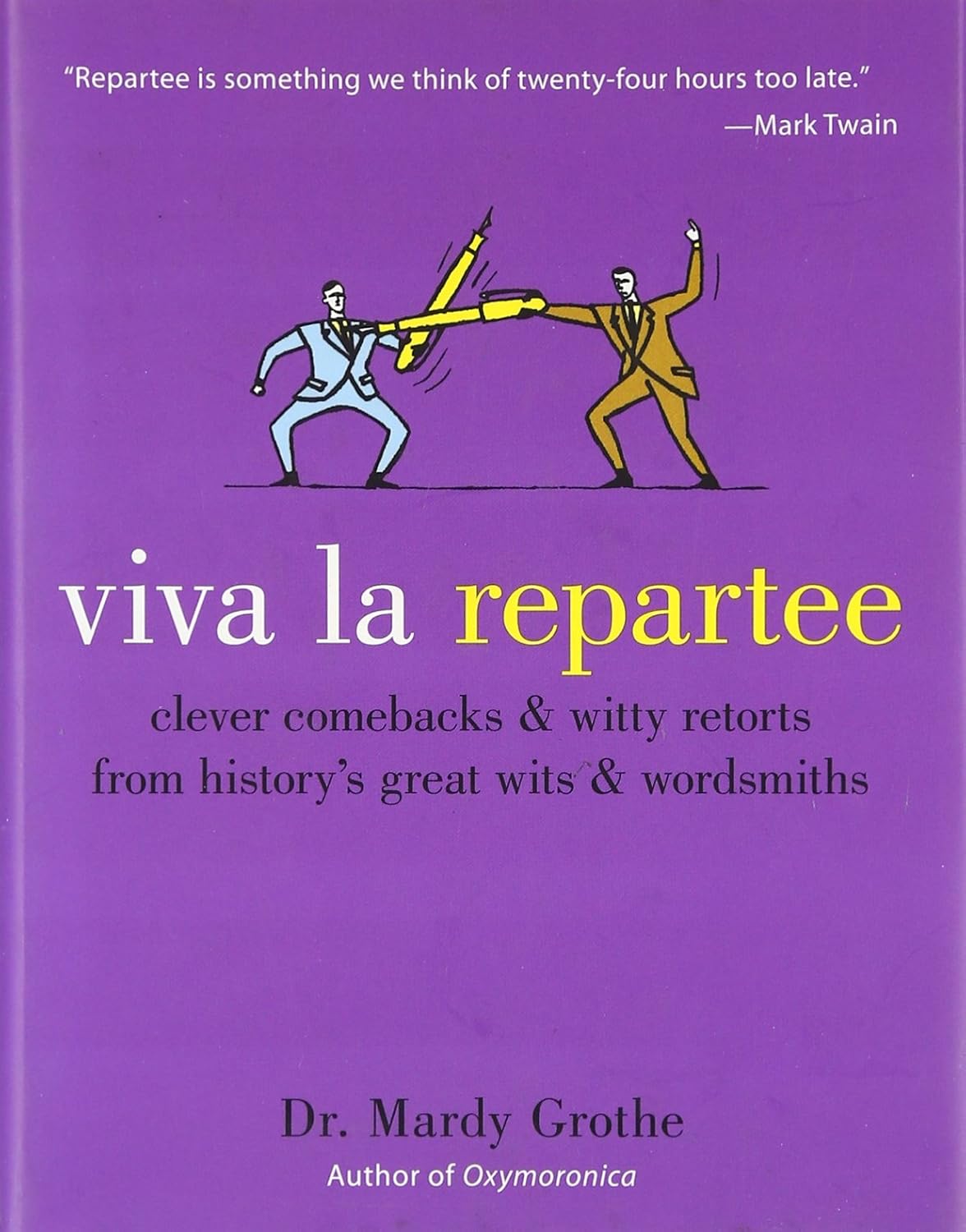
Complement with “Viva la Repartee: Clever Comebacks and Witty Retorts from History’s Great Wits and Wordsmiths” by Dr. Mardy Grothe.
For most of us, that perfect retort or witty reply often escapes us when we need it most, only to come to mind with perfect clarity when it’s too late to be useful.
The twentieth-century writer Heywood Broun described this all-too-common phenomenon when he wrote, “Repartee is what we wish we’d said.”
In “Viva la Repartee,” Dr. Mardy Grothe, author of “Oxymoronica,” has lovingly assembled a collection of masterfully composed — and perfectly timed — replies that have turned the tables on opponents and adversaries.
This delightful volume is a celebration of the most impressive retorts, ripostes, rejoinders, comebacks, quips, ad-libs, bon mots, off-the-cuff comments, wisecracks, and other clever remarks ever to come out of the mouths — and from the pens — of people throughout history.
Touching on all areas of human endeavor, including politics, the arts, literature, sports, relationships, and even the risqué, the book features contributions from Oscar Wilde, Mark Twain, Dorothy Parker, Mae West, Groucho Marx, Winston Churchill, Dolly Parton, and scores more.
As entertaining as it is intellectually enriching, “Viva la Repartee” is sure to capture the attention of language lovers and is the perfect antidote for anyone who’s ever thought I wish I’d said that!
HT: Reddit.

I’m a freelance writer with 6 years of experience in SEO blogging and article publishing. While you’re here, get the latest updates by subscribing to my newsletter.