.
 As newsrooms worldwide struggle to define the “human” element in an automated age, one Fortune editor has demonstrated how AI can actually help journalists increase the value of human-led reporting. By offloading aggregation to machines, journalists are freed to return to the field, according to a report by The Wall Street Journal.
Sometime in late 2024, the digital media landscape hit a turning point: the total volume of AI-generated articles on the web officially surpassed human-written ones. Once this Rubicon was crossed, the marginal cost of producing text effectively dropped to zero, flooding the internet with synthetic content.
This shift has placed mid-sized publications like Fortune in a brutal structural squeeze. Unlike The New York Times, they lack a massive, diversified subscriber base to buffer the transition.
Love reading and writing? Submit a post to our blog.
In today’s media landscape, these outlets are fighting for relevance and revenue against free conversational chatbots that summarize financial information instantly, not to mention the endless dopamine loop of short-form video on TikTok. To survive, Fortune must generate massive search traffic, and that is where AI-assisted writing becomes essential.
Fortune’s editor-in-chief, Alyson Shontell, noted that when you have a superstar editor who deeply understands financial news, you naturally wish you had ten more just like them. AI has become the mechanism that allows the publication to artificially scale one editor, such as Nick Lichtenberg, into a virtual ten-person news desk.
Nick Lichtenberg rejoined Fortune in July 2025. In the six months that followed, he produced over 600 published stories — more than any of his colleagues produced in an entire year. On one single Wednesday in February, he turned out seven distinct stories.
This was not merely “invisible” filler content, either. In the second half of 2026, AI-assisted stories, the vast majority of which were authored by Lichtenberg, accounted for nearly 20% of Fortune’s entire web traffic.
Driving 20% of a publication’s traffic through a single editor leveraging AI workflows breaks the foundational math of traditional publishing. It is entirely unprecedented.
Traditionally, journalism has functioned like an artisan workshop. One might think of films like “All the President’s Men” and its depiction of shoe-leather reporting, where journalists pound the pavement for months, cultivate sources in dimly lit parking garages, and slowly handcraft a single, world-changing story.
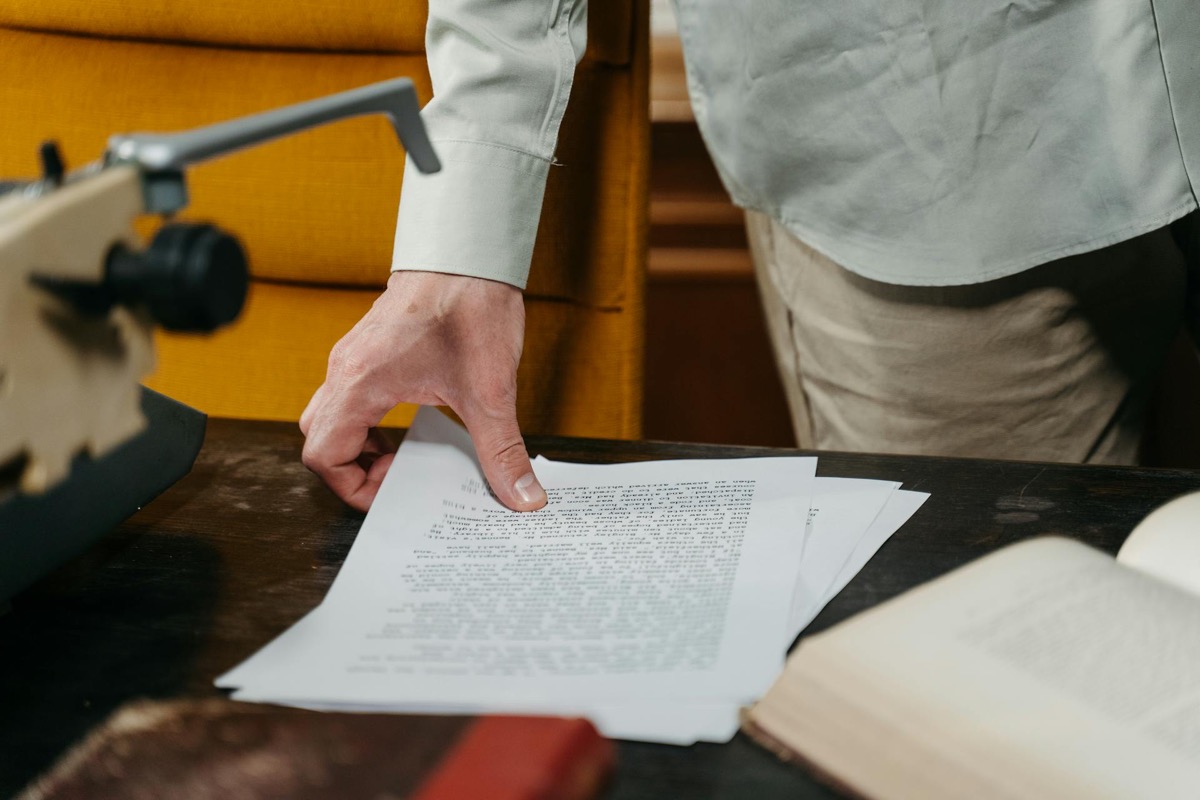
In contrast, the Lichtenberg approach represents the introduction of the industrial assembly line. It is high-speed and mechanized, churning out product at a rate the artisan workshop simply cannot match.
However, there is a fundamental structural truth about AI and underlying Large Language Models (LLMs): in their current iteration they are inherently backward-looking. An AI cannot interview a reluctant source, nor can it stand on a street corner to observe a cultural trend unfolding in real time. It only knows what has already been documented.
By outsourcing tedious, backward-looking aggregation — such as summarizing an Oracle bond deal — to machines, human journalists are forced to focus on the one thing the machine cannot do. This shift pushes them back into the real world to conduct original, forward-looking reporting, which is the exact premium content that readers actually value.
A perfect example of this synergy is Lichtenberg’s story about an electrician. Because he saved dozens of hours each week by using AI to handle the daily financial churn, his schedule was freed up to step away from his desk. He went out and wrote a completely original, long-form feature profile on a 23-year-old Gen Z electrician — a young man who deliberately skipped college to join a growing blue-collar revolution.
While the AI may have helped structure the final draft, the human empathy, the on-the-ground interviewing, and the observation of a shifting cultural dynamic were entirely the work of Nick Lichtenberg.

I’m a freelance writer with 6 years of experience in SEO blogging and article publishing. While you’re here, get the latest updates by subscribing to my newsletter.